SMO vs CRO: Which One Does What?
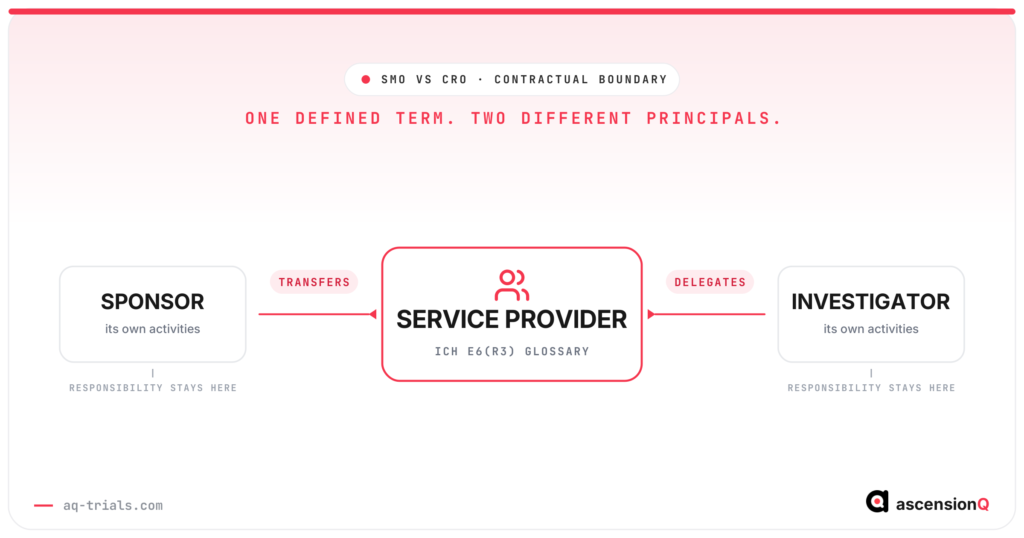
An SMO performs the activities the investigator is responsible for, and a CRO performs the activities the sponsor is responsible for. This guide covers the one defined term behind both, which obligations sit with each, what happens when an agreement is silent, and how a finding travels when a sponsor engages both on one study.
Site Management Organisations: A Complete Guide to Running Research Across Multiple Sites
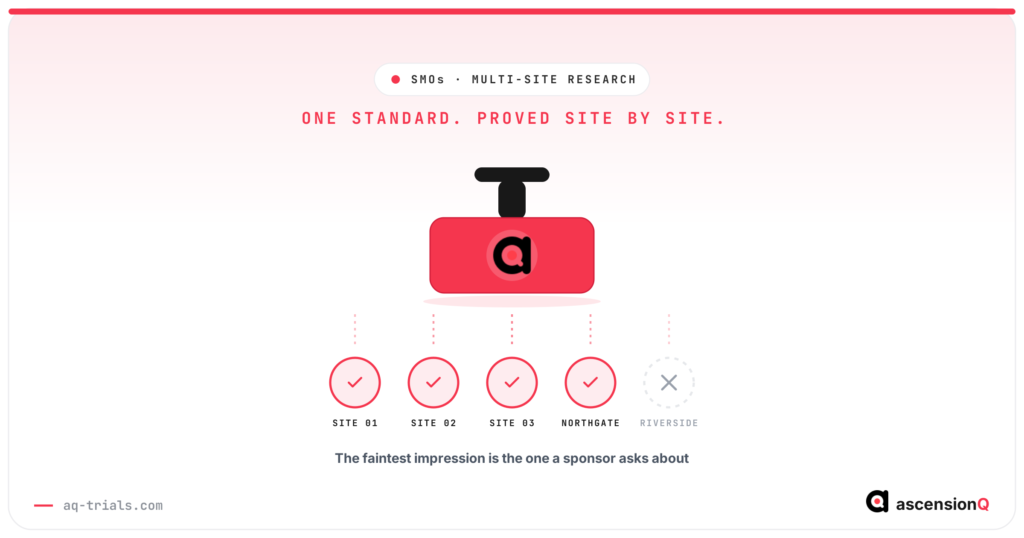
A site management organisation supplies the people, procedures and site capacity a sponsor’s study needs at the point of delivery, at sites it owns or through staff placed in host institutions. This guide covers the two operating models, who stays accountable, the network standard, recruitment, audit and metrics.
Receipt and Quarantine: Why Every Delivery Is Locked Until Someone Releases It
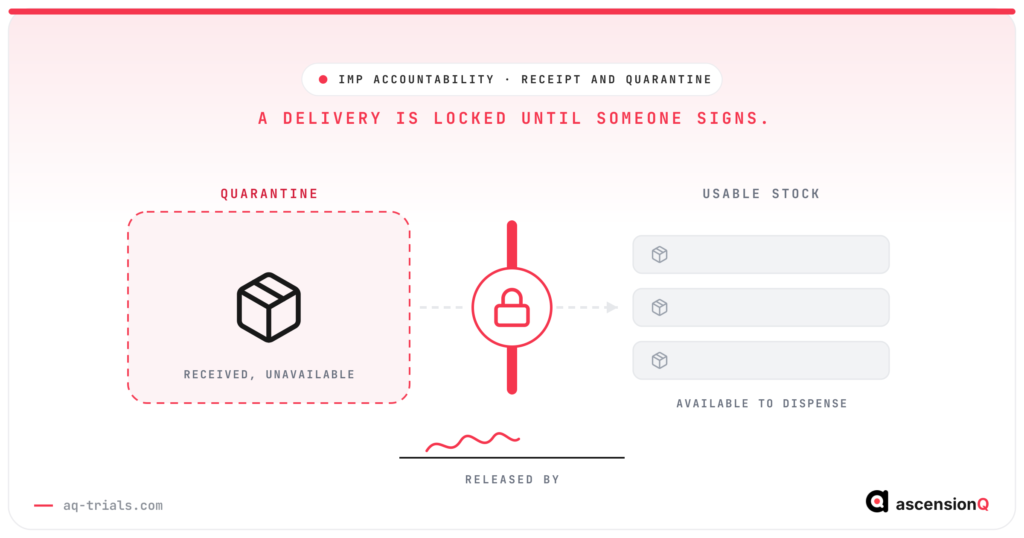
Every IMP delivery is locked in quarantine until a named member of pharmacy staff completes the receipt check and records a release decision. This guide covers the receipt sequence, the check against the packing list, the batch and expiry capture, the transit temperature record and the grounds for rejection.
How to Get a Trial Pharmacy to Green Light Before the Site Initiation Visit
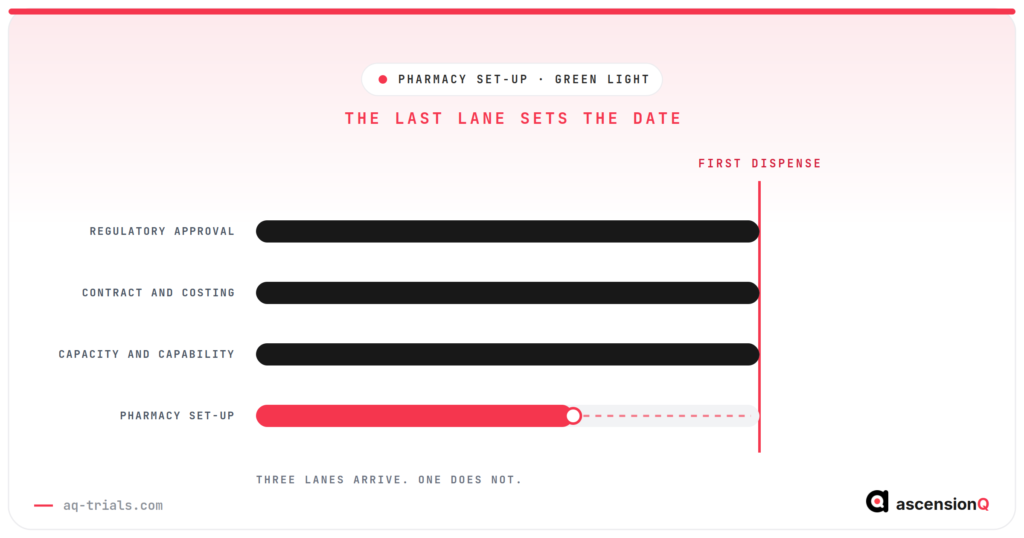
A trial pharmacy reaches green light by finishing the local set-up work behind a first dispense. This guide covers the four permissions behind green light, the pre-SIV checklist, who signs the readiness sign-off, the six conditions for a first dispense, and what a protocol amendment changes.
What Does an MHRA Inspector Look For in a Pharmacy Site File?
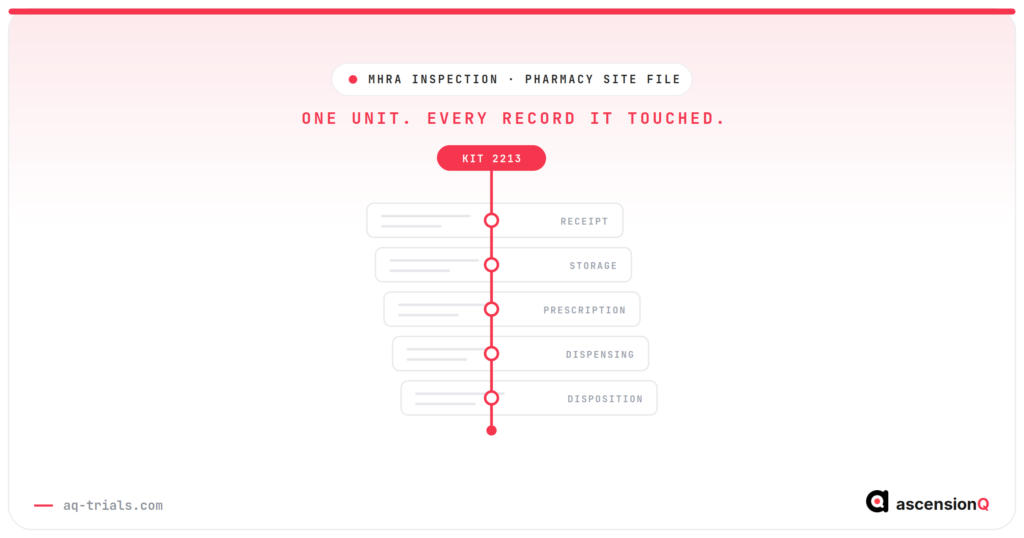
An MHRA inspector looks in a pharmacy site file for evidence that the site can rebuild the history of any unit of investigational medicinal product on demand. This guide covers the notification and dossier, what is requested and in what order, the walkthrough, the single unit trace and how findings are graded.
Who Releases IMP to a UK Site, and What Is QP Release?
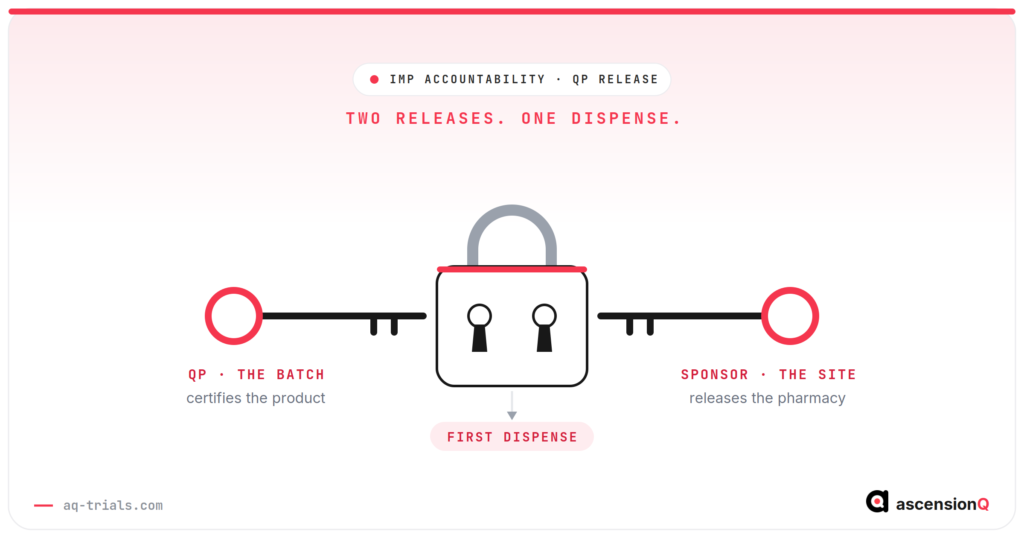
A Qualified Person releases an IMP batch by certifying it, and the sponsor releases that stock to a named site. This guide covers QP certification, the MIA(IMP) behind it, how an imported product reaches a UK site, the green light to dispense, and which release documents a pharmacy files.
IMP Labelling Requirements for UK Trials
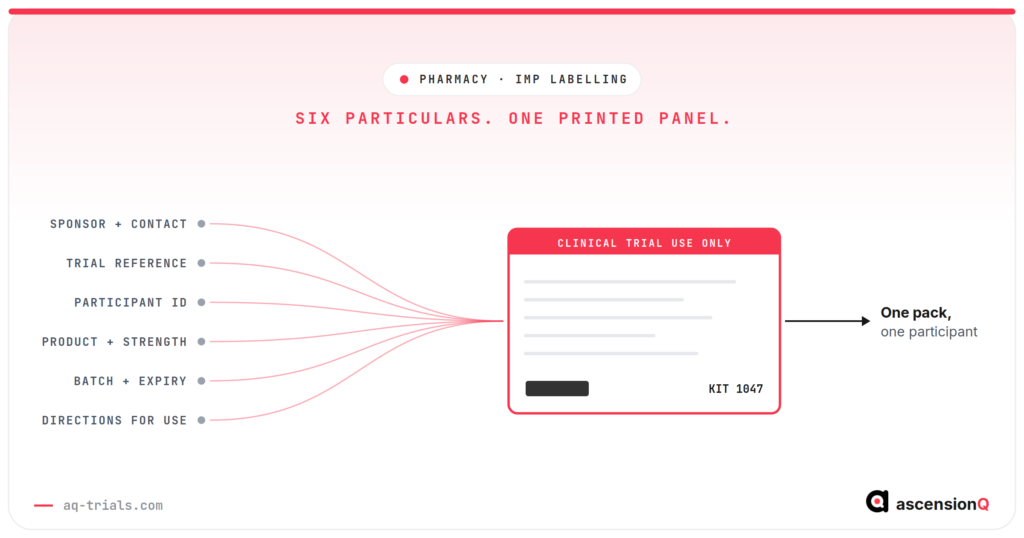
IMP labelling requirements for UK trials are set by regulation 46 of the Clinical Trials Regulations, as amended from 28 April 2026. This guide covers the particulars a full label must show, which labelling set applies to which product, who may apply or change a label, and expiry extension at site.
Blinding in the Pharmacy: Keeping the Secret and Breaking It in an Emergency
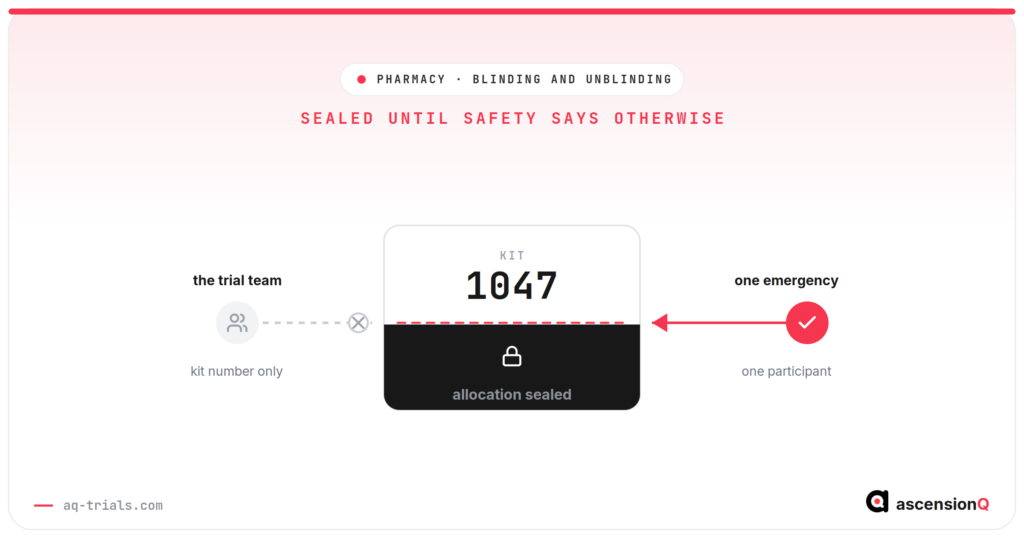
Blinding in the pharmacy means holding the treatment allocation out of reach of the trial team, and releasing it for one participant when a clinical emergency requires it. This guide covers who may know what is inside a kit, what ICH E6(R3) section 2.11 requires, how a code break runs, and what is recorded.
Delegation and Training: Why Who Did It Matters as Much as What Was Done
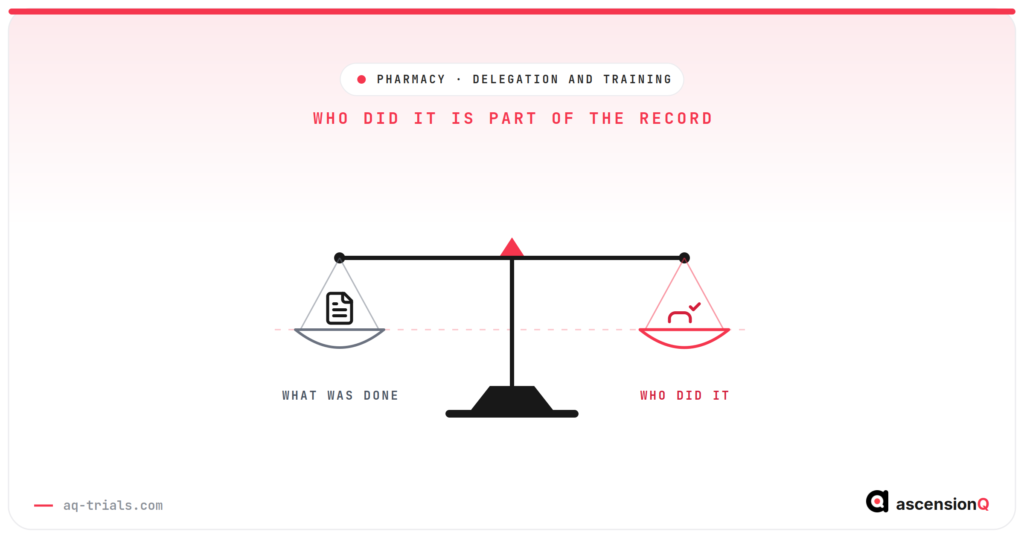
A pharmacy record entry counts as evidence when the person who made it was delegated that activity and trained for it on the day. This guide covers the authorised-and-trained condition, what a delegation log records, which activities need documenting, training currency, and what an inspector asks.
What Does ICH E6(R3) Require of IMP Management at the Site?
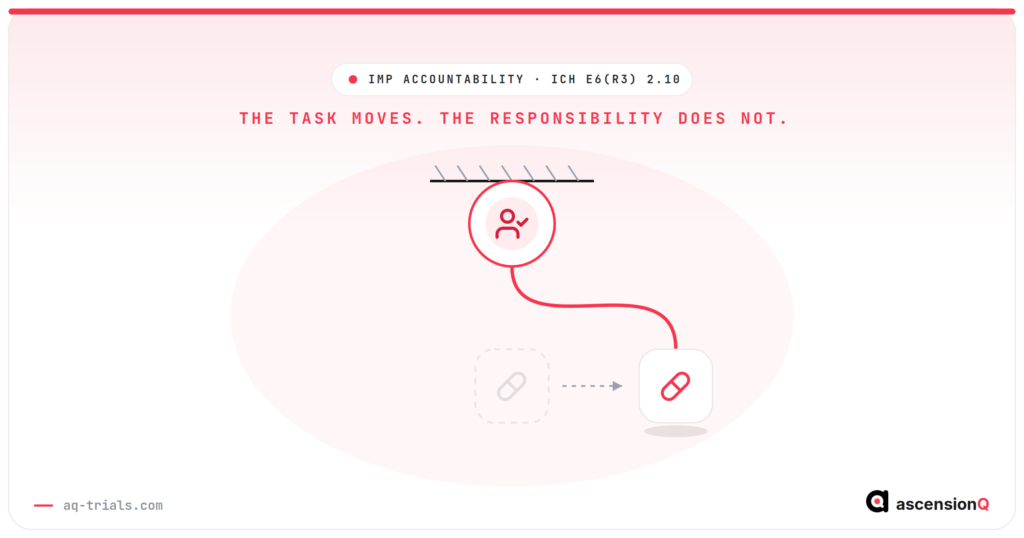
ICH E6(R3) requires the investigator or institution to hold responsibility for IMP management at the site, and section 2.10 sets that duty out in nine clauses. This guide takes each clause as it applies at a UK site, the conditions on delegating to a pharmacist, and where the sponsor’s duty begins.