
Manage essential trial files, controlled procedures and corrective actions in AQ. Give sponsor teams the evidence they need to review partner delivery and follow up outstanding work.

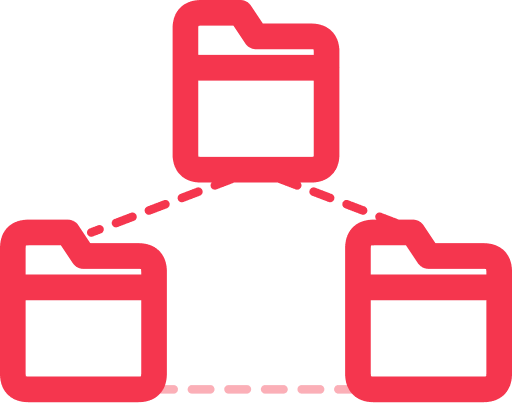








Partner updates need supporting records, current procedures and clear follow-up. AQ helps your team review the documentation and quality work within its scope.
Explore sponsor-file management, authorised document review, procedure changes and quality follow-up — from setup through closeout.
Organise expected trial documents, assign document responsibilities and configure authorised access. Use QMS for the controlled procedures and learning managed by your sponsor team.Review expected records, document versions and outstanding submissions in eTMF. Use file status to focus follow-up on the documents and contributors requiring attention.Administrators use the Sponsor Portal to give authorised sponsor reviewers access to specified studies, sites and document folders in participating AQ environments. Agree how records from other systems will be supplied and reviewed.Maintain the relevant approval records and current study documents in the appropriate files. Review, approve and publish controlled procedures in QMS, then assign learning to affected staff.Record investigations and root causes, assign corrective actions and review implementation evidence. Complete effectiveness verification before closing the CAPA.Review remaining documents and quality actions before handover or closeout. Agree the records to transfer, required exports, retention arrangements and access after delivery ends.
Contract negotiation and vendor qualification are not illustrated; they remain in your existing processes.Documents uploaded are not necessarily reviewed and accepted. Completeness, timeliness and quality are shown separately.The Sponsor Portal is the access layer used by administrators; it is not another clinical module. No cross-provider aggregate view is implied.Clinical assessment, local implementation and re-consent decisions remain with the responsible teams. Procedure learning does not prove site implementation.Routine corrections do not necessarily require formal CAPA.AQ does not close the clinical database, submit results or write the clinical study report.
Investigators and pharmacy teams maintain their own records. Authorised sponsor and CRO reviewers receive access to the studies, sites and document folders agreed for their work.
Reviewer access is granted per study, site and folder, with an end date. Document access does not infer participant-level access. Pharmacy scope applies only where pharmacy work is in review.
AQ covers trial documentation, procedures and quality, study operations, site, pharmacy and delegation workflows, and source forms and samples. Sponsors adopt the modules that match the work their organisation holds.
 The AQ platformAll nine modules are available. How your team uses each one depends on your responsibilities.
Maintain essential trial files, control procedures and learning, and follow formal quality actions through verification.
Manage study and site activity where delivery is conducted in AQ, with reporting available within the agreed access scope.
Support investigator files, pharmacy documentation and delegated site duties, with relevant evidence available for authorised sponsor review.
Support controlled source forms and sample handling at sites, with form versions, sample history and manifests available for authorised sponsor review.
Review the functions your team will use, the records that need to move and the controls your organisation requires before agreeing the deployment scope.
Demonstrate the sponsor, CRO and site responsibilities relevant to your studies.
Define migration, interfaces, user access, training and implementation responsibilities.
Assess validation, security, hosting, audit history, export and continued-access requirements.
Yes. Agree which sponsor workflows are managed in AQ, which partner records your reviewers may access and how evidence from other systems will be supplied.
The sponsor-file workflow can include documents supplied from other systems. Agree the submission, review and transfer process; do not assume access to a site’s underlying application.
No. Select eTMF, QMS and CAPA according to the workflows your organisation adopts. Add CTMS for relevant AQ-managed operations. Site, pharmacy and delegation modules depend on local responsibilities and access arrangements.
This configuration supports trial documentation, procedures, learning and quality actions. Clinical data management, safety case processing and regulatory submissions remain in the systems selected for those activities.
Review outstanding records and actions, agree the transfer scope, verify the required exports and confirm future custody, retention and access arrangements.
Bring your delivery model, existing systems and a study-review scenario. We will demonstrate the relevant modules, review permissions and quality workflows.
Practical walkthroughs aligned with active research delivery.
We’ll only use your details to arrange your demo and
send relevant AQ updates. No spam.
Pick a module, your organisation type, or both — we'll match the guides and email them to you.
Try one filter at a time, or clear to see all guides.
✓ Written for first-in-human & Phase 1 sites
✓ Inspection-ready checklists & templates
✓ Aligned to MHRA, FDA & EU Annex 11