The World Health Organization defines pharmacovigilance as the science and activities related to the detection, assessment, understanding, and prevention of adverse effects or any other medicine-related problem. Notably, Pharmacovigilance scope requires structured processes, controlled documentation, and continuous oversight, which directly aligns with quality management systems.
It is essential to understand how pharmacovigilance operates within quality management because safety monitoring depends on controlled processes, defined responsibilities, and complete traceability to ensure accurate reporting, regulatory compliance, and patient safety.
Therefore, let us guide you through it.
What is Pharmacovigilance? Definition in Simple Terms
Pharmacovigilance means monitoring the safety of medicinal products throughout their lifecycle. The World Health Organization defines pharmacovigilance as the science and activities related to the detection, assessment, understanding, and prevention of adverse drug reactions and other medicine-related problems. In practical terms, pharmacovigilance ensures that the benefit risk balance of a drug remains acceptable as it moves from controlled trials into real-world use. Clinical trials generate safety data under controlled conditions with selected patient groups. Real-world use introduces variability across millions of patients, including co-morbidities, multiple medications, and inconsistent adherence. Pharmacovigilance bridges this gap by continuously tracking adverse drug reactions and updating safety knowledge after approval.
Pharmacovigilance covers:
- detection of adverse drug reactions (ADR) from real-world patients
- assessment of benefit risk balance using ongoing safety data
- understanding patterns trends and safety signals across populations
- prevention of harm through label updates risk controls and regulatory action
- continuous post market safety monitoring of medicinal products
A simple way to understand pharmacovigilance is to view it as a continuous safety feedback system. It ensures that safety does not stop at approval, but in fact, continues as long as the product remains in use.
Also Read: What is QMS (Quality Management System) in Clinical Research?
Pharmacovigilance vs Drug Safety Within Quality Systems
Pharmacovigilance and drug safety operate together within a quality management system, but each serves a distinct role. Pharmacovigilance governs the full safety lifecycle, while drug safety focuses on the scientific evaluation of risks.
| Aspect | Pharmacovigilance | Drug Safety |
| Scope | End-to-end system for detection assessment understanding and prevention of adverse drug reactions | Scientific evaluation of adverse effects and risk profiles |
| Position in QMS | Operates as a structured quality process governed by SOPs training CAPA and audits | Operates as a functional activity within the pharmacovigilance system |
| Primary Focus | Continuous safety monitoring across lifecycle including post market phase | Identification and analysis of risks benefit risk evaluation |
| Data Handling | Collects processes and reports ICSRs signals and aggregate data | Interprets safety data and supports medical decision making |
| Regulatory Role | Ensures compliance with EMA FDA WHO pharmacovigilance requirements | Supports regulatory submissions through safety analysis |
| Outputs | Signal detection PSUR PBRER DSUR risk management plans label updates | Safety assessments causality evaluation clinical risk insights |
| Quality Control | Controlled through document management training compliance tracking CAPA and audit trails | Controlled through medical review standards and safety evaluation protocols |
| Lifecycle Coverage | Pre clinical clinical trials and post market surveillance | Primarily focused on evaluation during and after data collection |
| Operational Ownership | Managed by QPPV MAH and pharmacovigilance system stakeholders | Managed by medical safety teams and pharmacovigilance scientists |
Pharmacovigilance establishes the system and controls whereas Drug Safety delivers the scientific evaluation within that system.
Why is Pharmacovigilance Important in Quality Management?
- Maintains continuous control over drug safety across the full product lifecycle
- Ensures early detection of adverse drug reactions in real world use
- Protects patient safety through timely risk identification and action
- Supports benefit risk balance through structured safety evaluation
- Enables regulatory compliance with EMA FDA and WHO pharmacovigilance requirements
- Prevents safety gaps caused by limited clinical trial data
- Strengthens decision making through real world safety evidence
- Drives label updates risk minimisation measures and product actions
- Connects safety data with SOPs training and compliance controls within QMS
- Ensures traceability of safety events decisions and outcomes
- Enables structured deviation handling and CAPA for safety related issues
- Maintains audit readiness with complete safety documentation and records
- Supports signal detection through consistent and reliable data collection
- Protects product licence and regulatory standing
- Reduces risk of product recalls market withdrawal and compliance actions
- Builds regulatory trust and long term public health confidence
Pharmacovigilance Process Within a Quality System
Now, let us walk you through the end-to-end Pharmacovigilance process within quality management:
Step 1: Data Collection and Case Intake Under Controlled Conditions
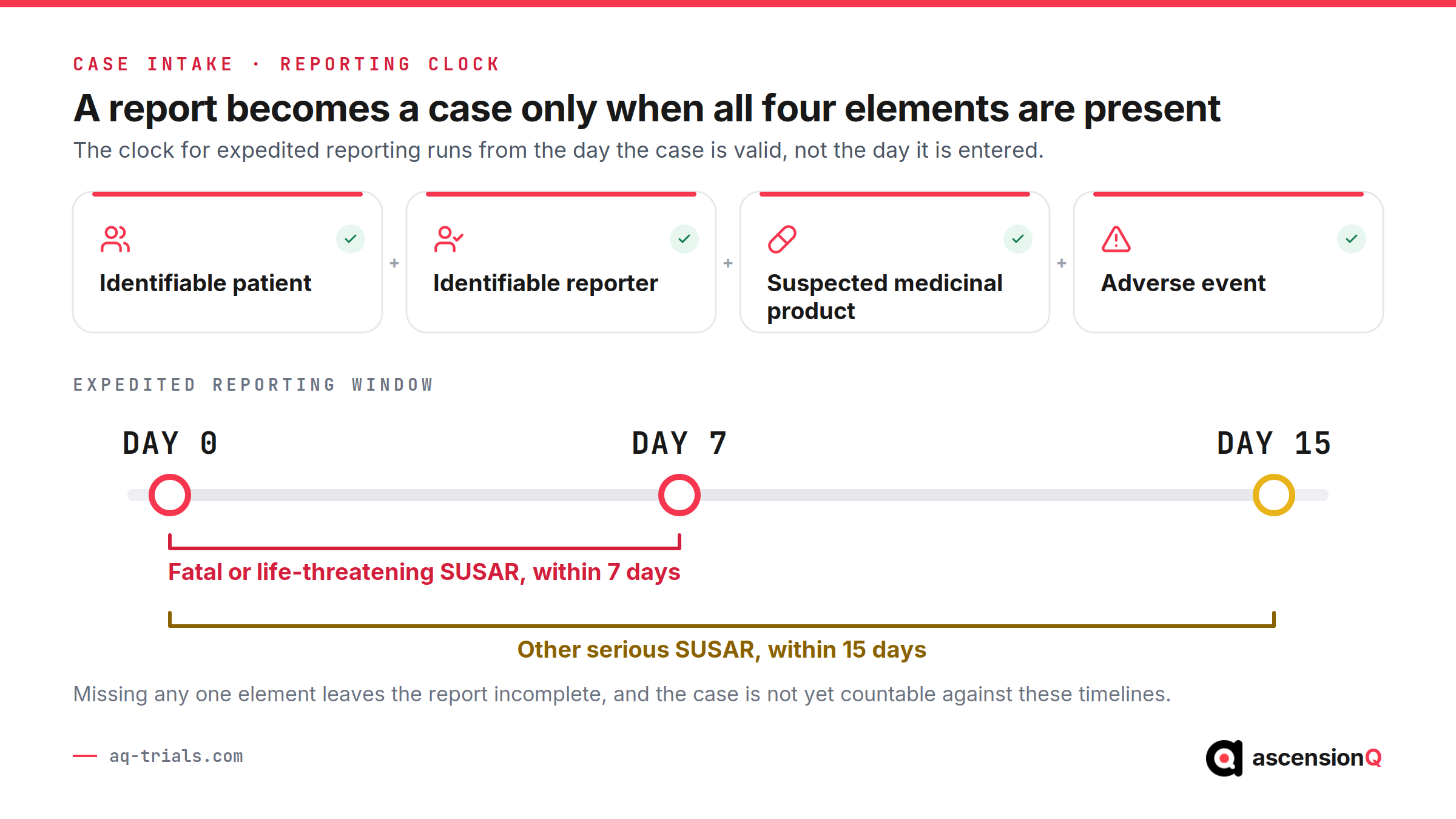
Pharmacovigilance begins at the point where a suspected adverse event is first reported. A valid case requires four elements: an identifiable patient, an identifiable reporter, a suspected medicinal product and an adverse event. A quality system ensures that every incoming report is captured within a controlled workflow with clear ownership traceability and timeline control from the moment of receipt.
- receive reports from clinical sites healthcare professionals patients literature and regulatory sources
- verify minimum case criteria before accepting the report as valid
- log the case in a controlled system with date of receipt and source details
- assign responsibility based on defined roles within the quality system
- initiate regulatory timelines from the first awareness date
- maintain full traceability of intake records for audit and inspection
Step 2: ICSR Processing Through Structured Assessment and Coding
Each valid report is converted into an Individual Case Safety Report and processed through a structured workflow. A quality system standardises classification and coding to ensure consistency across all cases and regulatory submissions.
- perform triage based on seriousness expectedness and reporting obligations
- classify cases as serious non serious or SUSAR where applicable
- enter structured data into the safety database using defined formats
- apply MedDRA coding for adverse events and WHO Drug Dictionary for products
- check completeness and internal consistency of case data
- maintain version control and audit trail for all data updates
Step 3 Medical Evaluation Causality and Documentation
Medical review establishes the clinical relevance of the reported event and its relationship with the medicinal product. A quality system ensures that evaluations follow defined medical standards and remain fully documented for regulatory review.
- conduct causality assessment using recognised clinical methods
- evaluate expectedness against reference safety information
- assess seriousness clinical outcome and supporting medical evidence
- prepare structured narratives describing the case in clinical terms
- document medical judgement and rationale for conclusions
- ensure review and approval by qualified medical professionals
Step 4: Signal Detection Through Continuous Monitoring
Accumulated safety data is analysed to identify patterns, trends or new risks associated with the product. A quality system ensures that signal detection follows consistent methods and that all findings are documented and reviewed through a controlled process.
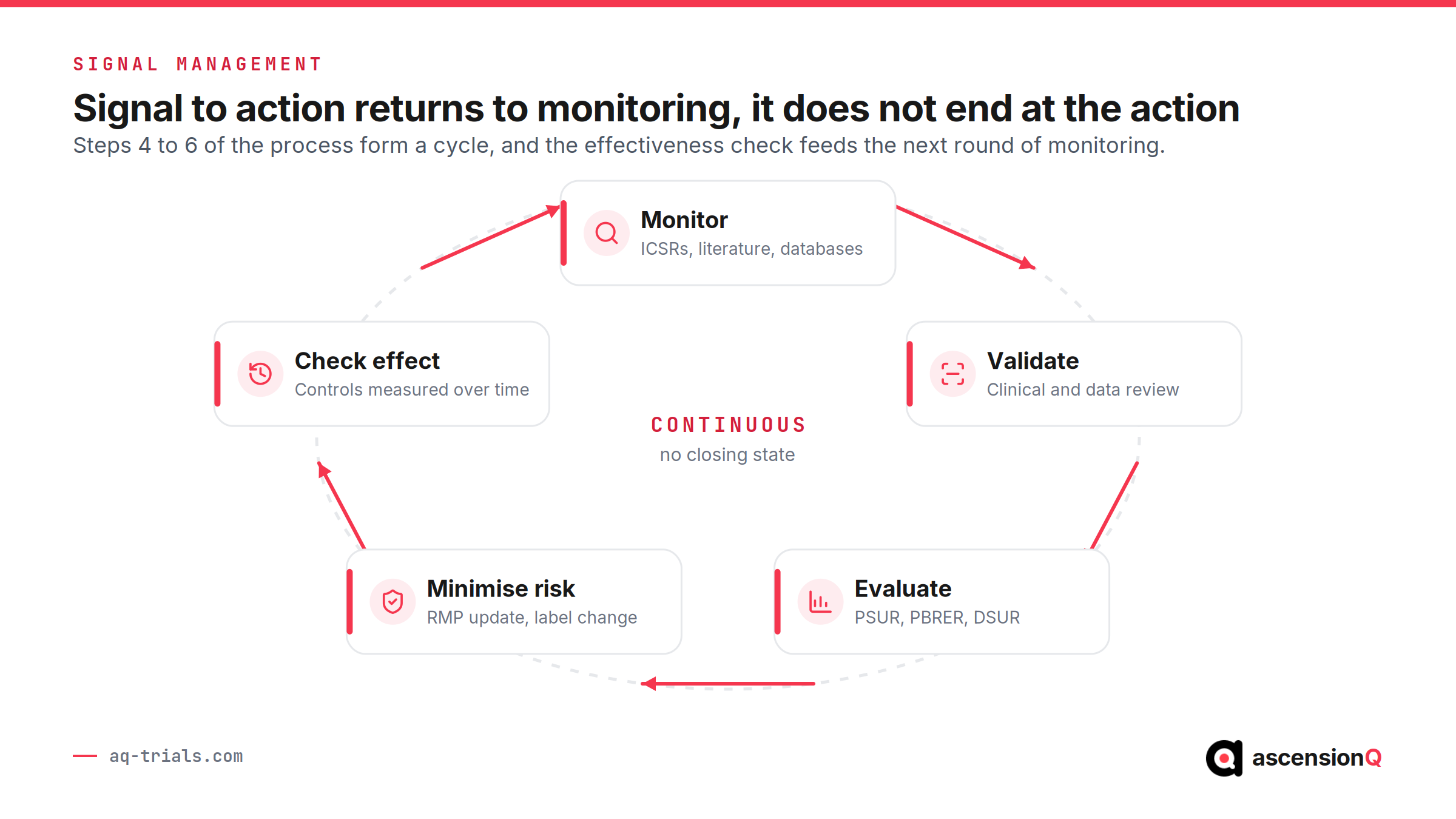
- monitor safety data across ICSRs literature and regulatory databases
- apply statistical methods such as proportional reporting ratios and reporting odds ratios
- identify new adverse reactions or changes in frequency
- validate signals through clinical and data review
- document signal evaluation decisions and supporting evidence
- escalate confirmed signals for further regulatory and risk action
Step 5: Aggregate Reporting for Ongoing Safety Evaluation
Periodic reports provide a cumulative evaluation of the product safety profile using global data. A quality system ensures that reporting remains consistent complete and aligned with regulatory timelines and formats.
- prepare PSUR PBRER DSUR and PADER reports as required
- compile cumulative safety data from all available sources
- evaluate benefit risk balance using aggregated evidence
- include line listings summaries and signal assessments
- submit reports to authorities such as EMA FDA and MHRA within timelines
- maintain approval records and documentation for audit readiness
Step 6: Risk Management and Risk Minimisation Measures
Pharmacovigilance concludes each cycle with actions to control identified risks and protect patients. A quality system ensures that risk measures are implemented tracked and continuously improved through structured processes.
- update risk management plans based on new safety information
- implement risk minimisation measures such as label updates warnings and restrictions
- initiate CAPA for safety related deviations and systemic issues
- conduct post authorisation safety studies where required
- monitor effectiveness of implemented risk controls over time
- maintain full traceability of actions decisions and outcomes within the system
Also Read: What is CTMS
Types of Pharmacovigilance Within Quality Management
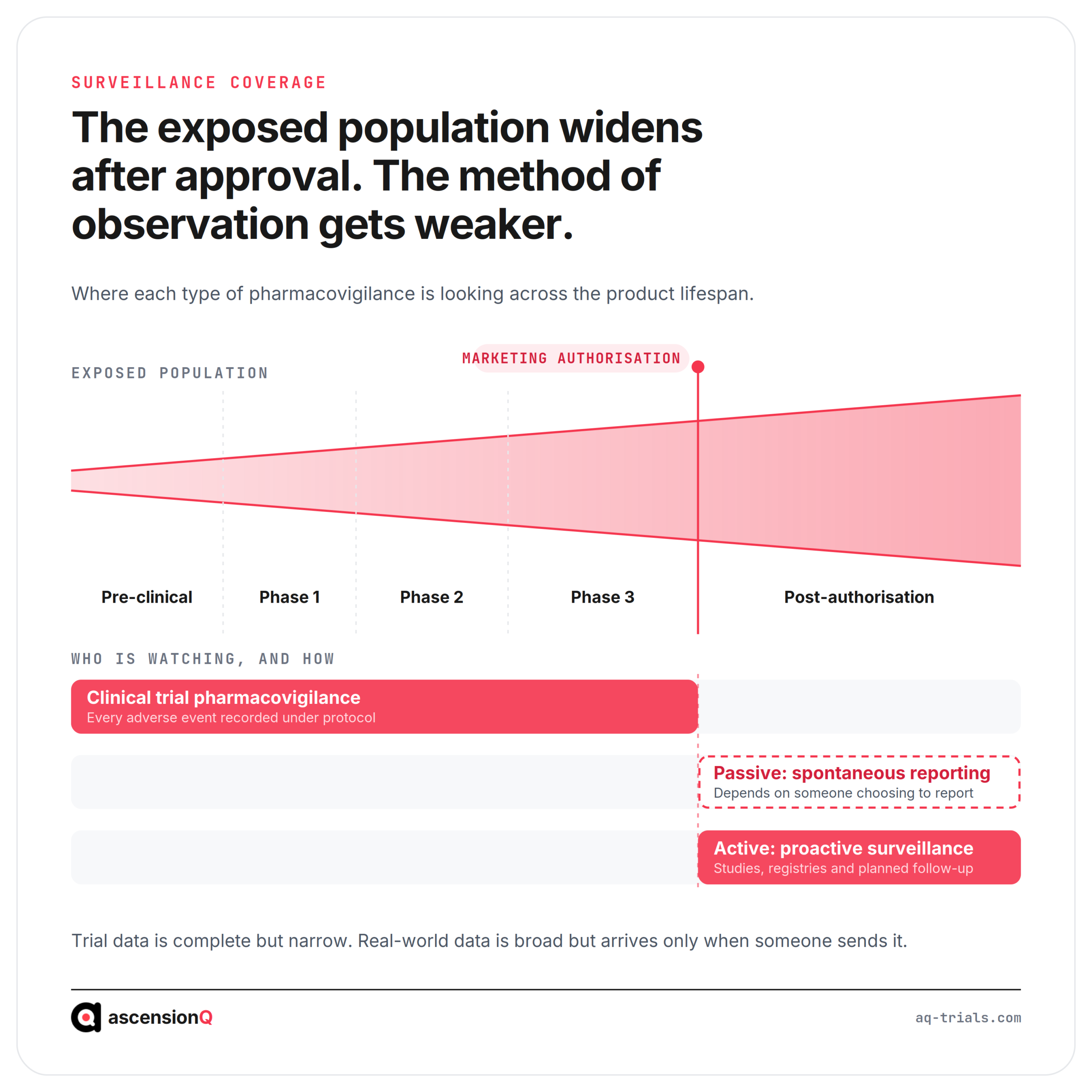
- Passive Pharmacovigilance (Spontaneous Reporting). Safety information comes from reports submitted by doctors, patients, or published literature. The system collects and processes what gets reported. It depends on voluntary reporting, so it may not capture every issue.
- Active Pharmacovigilance (Proactive Surveillance). Safety data is collected in a planned and structured way. Studies, registries, and follow-ups are used to actively look for risks instead of waiting for reports.
- Clinical Trial Pharmacovigilance. Safety is monitored during clinical trials before approval. Every adverse event is recorded, reviewed, and reported under strict timelines and controlled conditions.
- Post Market Pharmacovigilance. Safety monitoring continues after the drug is approved and used by the public. Data from real-world use helps identify risks that were not visible during trials.
- Digital and Social Media Pharmacovigilance. Safety information is identified from online sources such as social media, patient forums, and health records. This helps capture early signals that may not be formally reported.
Also Read: DMS vs eQMS in Clinical Trial Data Management
When Pharmacovigilance Starts in the Quality Management Lifecycle? Pharmacovigilance begins before human trials and continues throughout the entire product lifecycle. Safety monitoring evolves at each stage, with quality systems ensuring that data remains controlled, traceable, and aligned with regulatory requirements.
Pre Clinical Safety Data and Quality Planning
Pharmacovigilance starts during pre clinical development with safety data from laboratory and animal studies. Notably, this stage defines the initial safety profile and sets the foundation for controlled monitoring in human trials.
- identifies potential risks such as organ toxicity reproductive effects and dose limits
- defines what safety parameters require close monitoring in humans
- establishes reference safety information for expected adverse events
- supports protocol design and inclusion exclusion criteria
- forms the basis for safety reporting and assessment during early trials
Phase 1 to Phase 3 Safety Monitoring During Clinical Trials
Safety monitoring continues during clinical trials under controlled conditions. Each phase expands the safety database while maintaining strict regulatory reporting and documentation requirements.
- captures all adverse events from trial participants across all phases
- identifies serious adverse events and SUSARs for expedited reporting
- applies strict reporting timelines such as 7 or 15 day requirements
- builds the safety profile used for regulatory approval
- maintains structured documentation including DSUR and safety records
Post Market Safety Monitoring and Continuous Quality Control
Safety monitoring expands after marketing authorisation as the product reaches a larger and more diverse population. Pharmacovigilance becomes a continuous process supported by quality systems and regulatory oversight.
- collects adverse event data from real world use across large populations
- performs ongoing signal detection to identify new or changing risks
- prepares periodic reports such as PSUR and PBRER
- updates labels and risk management plans based on new evidence
- maintains continuous compliance audit readiness and traceability across all safety activities
Also Read: What is an eTMF in Clinical Trial Research?
Who is Responsible for Pharmacovigilance in Quality Management?
| Stakeholder | Responsibility in Pharmacovigilance | Responsibility Within Quality Management |
| Marketing Authorisation Holder (MAH) | Holds overall responsibility for pharmacovigilance system and regulatory compliance | Ensures a functioning quality system with SOPs oversight audit readiness and full compliance control |
| Qualified Person for Pharmacovigilance (QPPV) | Oversees the pharmacovigilance system and ensures safety data is properly managed and reported | Maintains oversight of PV quality processes ensures system effectiveness and inspection readiness |
| Local Pharmacovigilance Representatives (LPPV LCPPV) | Manages local safety reporting and compliance with country specific regulations | Ensures local processes follow global SOPs and maintains documentation and audit trails |
| Sponsor | Responsible for safety monitoring during clinical trials and regulatory reporting | Ensures trial level quality control documentation and compliance with GCP and PV requirements |
| Contract Research Organisation (CRO) | Performs delegated pharmacovigilance activities such as case processing and reporting | Follows sponsor defined SOPs maintains data quality and supports audits and inspections |
| Investigator Sites | Identifies and reports adverse events from trial participants | Ensures accurate reporting documentation and protocol compliance at site level |
| Healthcare Professionals | Reports adverse drug reactions observed in clinical practice | Contributes to quality data through accurate and timely reporting |
| Patients | Reports side effects and real world experiences with medicinal products | Provides real world safety data that supports continuous quality monitoring |
| Regulatory Authorities EMA FDA MHRA WHO | Reviews safety data enforces compliance and takes regulatory action when required | Conducts inspections defines guidelines and ensures quality system compliance across organisations |
Is Pharmacovigilance Mandatory Under Quality and Regulatory Requirements?
Pharmacovigilance is a legal and regulatory requirement for any organisation that develops, markets, or manages medicinal products. Regulatory authorities such as the EMA, FDA, and MHRA require a fully functional pharmacovigilance system supported by a formal quality management system. The Marketing Authorisation Holder (MAH) holds direct responsibility for compliance, which includes maintaining continuous safety monitoring, reporting adverse drug reactions, and ensuring inspection readiness.
Notably, regulatory frameworks define pharmacovigilance as an ongoing obligation across the entire product lifecycle, not a one-time activity at approval. Failure to comply can result in inspection findings, regulatory action, or product withdrawal.
Standards and guidelines that must be met:
- Directive 2010/84/EU and Regulation (EU) No 1235/2010 defining pharmacovigilance obligations within the European Union
- Good Pharmacovigilance Practices (GVP Modules I–XVI) issued by EMA covering PV systems quality requirements risk management and reporting
- 21 CFR Part 314 and FDA MedWatch requirements governing adverse event reporting and post marketing safety in the United States
- ICH E2E guideline for pharmacovigilance planning and risk management systems
- ICH E2B(R3) standard for electronic transmission of Individual Case Safety Reports (ICSRs)
- ICH E2C guideline for periodic safety update reports (PSUR PBRER)
- GCP guidelines (ICH E6) ensuring safety reporting during clinical trials
- WHO Programme for International Drug Monitoring (WHO PIDM) supporting global safety data exchange and monitoring
- EudraVigilance and FAERS systems for regulatory submission and signal detection
- Risk Management Plan (RMP) requirements for identifying and controlling product risks
- Pharmacovigilance System Master File (PSMF) as a mandatory record of the PV system structure and operations
Also Read: What is ePSF in Clinical Trial Data Management?
Consequences of Pharmacovigilance Failure in Quality Management
The thalidomide case in 1961 is the defining example of pharmacovigilance failure. Thalidomide, marketed as Contergan, was widely prescribed without adequate post-market safety monitoring. Thousands of children were born with severe birth defects across multiple countries. Regulatory response followed only after widespread harm. This event shaped modern pharmacovigilance regulations, leading to structured oversight by authorities such as the FDA, EMA, and national regulatory agencies. It also established pharmacovigilance as a mandatory function tied to MAH obligation, regulatory inspection, and continuous safety monitoring across the product lifecycle.
Regulatory consequences
- critical inspection findings raised during EMA and FDA regulatory inspections due to inadequate pharmacovigilance systems
- formal deficiency letters and enforcement actions linked to non compliance with GVP legal basis, 21 CFR Part 314, and EU legislation such as Directive 2010/84/EU and Regulation (EU) No 1235/2010
- variations imposed on marketing authorisation conditions requiring additional safety controls or restrictions
- suspension or complete withdrawal of product licence following safety failures
- increased regulatory scrutiny across all products held by the same MAH
Operational consequences
- delayed detection of adverse drug reactions leading to preventable patient harm as seen in thalidomide related birth defects
- product recalls and post-market withdrawal due to unacceptable safety risks
- disruption in clinical and commercial operations due to urgent regulatory actions
- legal liability including litigation claims and compensation for affected patients
- internal CAPA escalation and system overhaul to address systemic pharmacovigilance gaps
Reputational consequences
- public regulatory actions such as warning letters and product withdrawals affecting company credibility
- long term damage to regulatory relationships with authorities such as FDA EMA and other NRAs
- reduced trust among healthcare professionals and patients in the product and company
- increased difficulty in obtaining future marketing authorisations due to prior compliance history
- lasting association with safety failures within pharmacovigilance historical background discussions
Also Read: What Is Clinical Research Software and How to Choose the Right One?
How AQ Trials Clinical Research Platform Supports Pharmacovigilance?
Pharmacovigilance requires controlled processes, defined responsibilities, and complete traceability across clinical research. AQ Trials delivers this through its integrated eQMS, which connects quality management with study execution so that every safety-related action follows approved procedures, trained roles, and audit-ready documentation.
Here’s how AQ Trials eQMS supports Pharmacovigilance:
- Document Control within eQMS Centralised management of SOPs, protocols, and safety procedures with full version history, controlled access based on roles, and structured approval workflows. Each update remains traceable, and only approved versions remain available for use during safety-related activities.
- Training Management within eQMS Role-based training linked directly to SOPs and protocol updates, with mandatory acknowledgement and competency validation. Training completion remains recorded with timestamps, ensuring that only qualified personnel perform pharmacovigilance-related tasks.
- Staff Compliance Monitoring Continuous visibility into compliance status across sites and roles through real-time tracking of training, acknowledgements, and procedural alignment. This ensures that each activity is performed by personnel who meet defined requirements.
- Deviation and Nonconformance Management Structured capture of safety-related issues such as delayed reporting or protocol deviations, with each record linked to the responsible role, study activity, and timeline. All events remain documented with full traceability for review and follow-up.
- CAPA Management within eQMS End-to-end management of corrective and preventive actions, including root cause analysis, action assignment, and progress tracking until closure. Each CAPA record links directly to the originating issue, ensuring controlled resolution and prevention of recurrence.
- Audit and Inspection Management Maintenance of inspection-ready records across all pharmacovigilance-related processes, including audit findings, corrective actions, and resolution status. All documentation remains accessible with complete traceability during regulatory inspections.
- Change Management Controlled handling of updates to SOPs, protocols, and safety processes through defined approval workflows. Each change links to required training and impacted processes, ensuring alignment between updated procedures and execution.
- Risk Management Identification, assessment, and monitoring of risks related to safety reporting and study execution, with assigned mitigation actions and tracked outcomes. Risk records remain connected to ongoing activities within the system.
- Audit Trail and Activity Logging Complete recording of all system activities with user identity, timestamps, and contextual details. This ensures full traceability across every safety-related action and supports data integrity and regulatory compliance.
Ultimately, AQ Trials eQMS ensures consistent safety data, clear ownership, full traceability for end-to-end Pharmacovigilance. All aligned with EMA, FDA, and MHRA, and controlled workflows that support timely reporting and reliable signal detection.
Also Read: What is CAPA Management Software in Clinical Research?
Move Forward with AQ Trials eQMS
AQ Trials eQMS connects quality processes with clinical trial execution so that pharmacovigilance operates with control, visibility, and accountability at every step.
A live walkthrough shows safety events captured with assigned ownership, signal review tracked through to a documented action, and an audit trail that records every safety-related change with user identity and timestamp. Book a live demo to see how AQ Trials eQMS supports compliant, audit-ready pharmacovigilance across your clinical research environment.