Medidata Alternatives: CTMS Without Enterprise Overhead
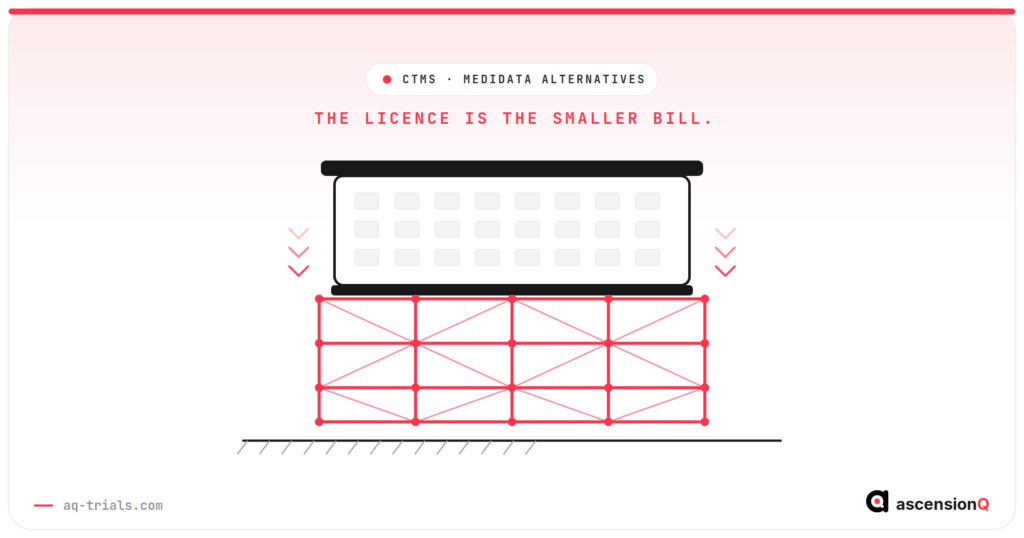
Medidata alternatives are the systems considered when a platform’s operating cost outgrows the portfolio it supports. This guide covers what Medidata publishes about its own products, the six enterprise overhead lines a buyer supplies, the EDC question that decides the shortlist, and how to test proportionality.
Veeva Vault CTMS Alternatives for Mid-Market and NHS Teams
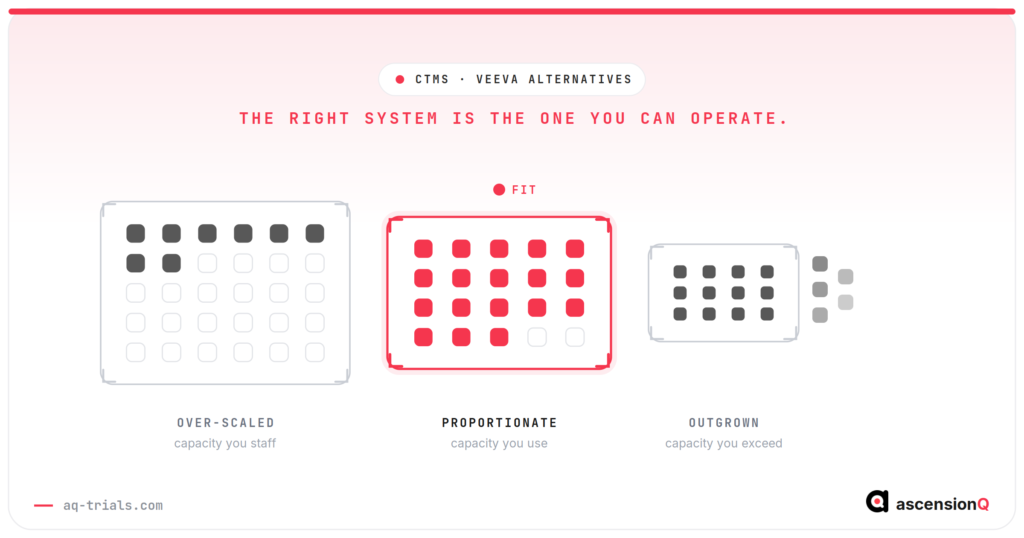
Veeva alternatives compared and named from vendor-published wording: Medidata CTMS, Oracle Life Sciences CTMS, Advarra OnCore, Veeva SiteVault CTMS and AQ. This guide covers the twelve applications Veeva names in its own suite, the conditions that send mid-market and NHS teams looking, and the five commitments a trial management decision locks in.
Beyond REDCap: When Academic Teams Need a Full CTMS
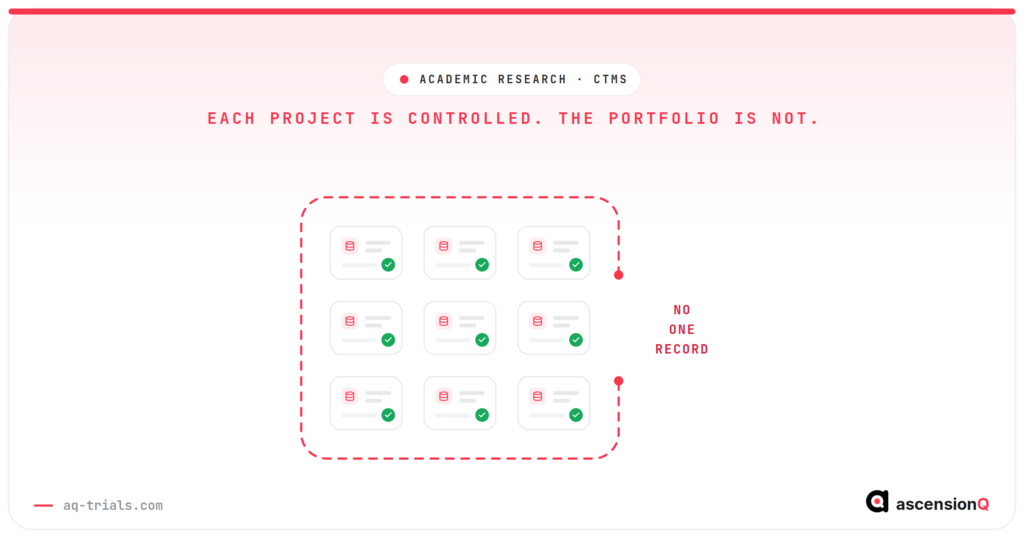
Academic teams move from REDCap when the unit of accountability changes from the project to the portfolio. This guide covers what sponsorship places on the organisation, six signals that a team has outgrown a project database, what UKCRC registration asks of systems, and what the move costs.
Is REDCap Enough for GCP-Compliant Clinical Trials?
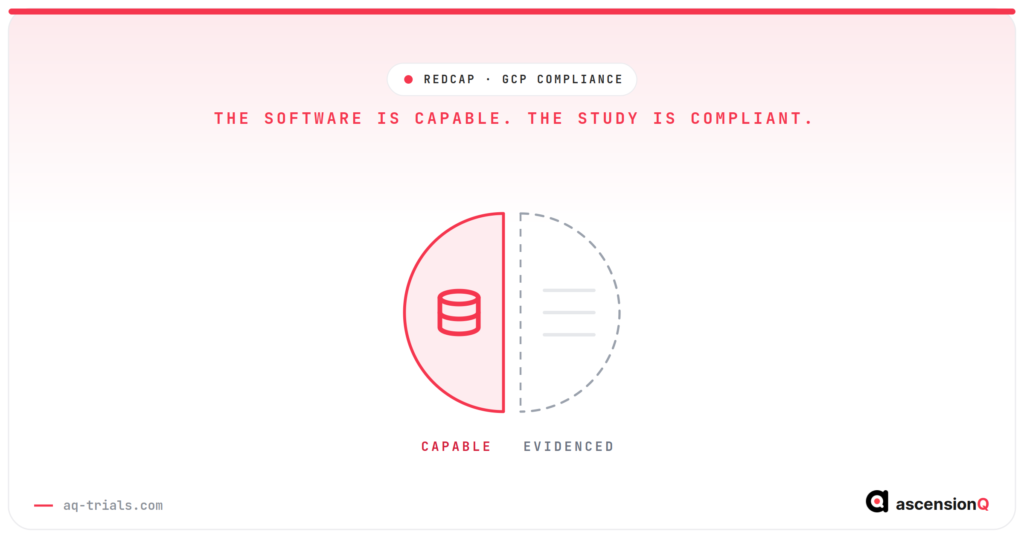
REDCap can be used inside a GCP-compliant trial, and the consortium states that no software alone is compliant. This guide covers what the MHRA made law on 28 April 2026, the eight computerised-system duties in ICH-GCP E6(R3) Annex 1 Section 4.3, the two-level validation model, and twelve questions to ask before your next inspection.
Edge vs a Connected CTMS: What NHS R&D Teams Should Know
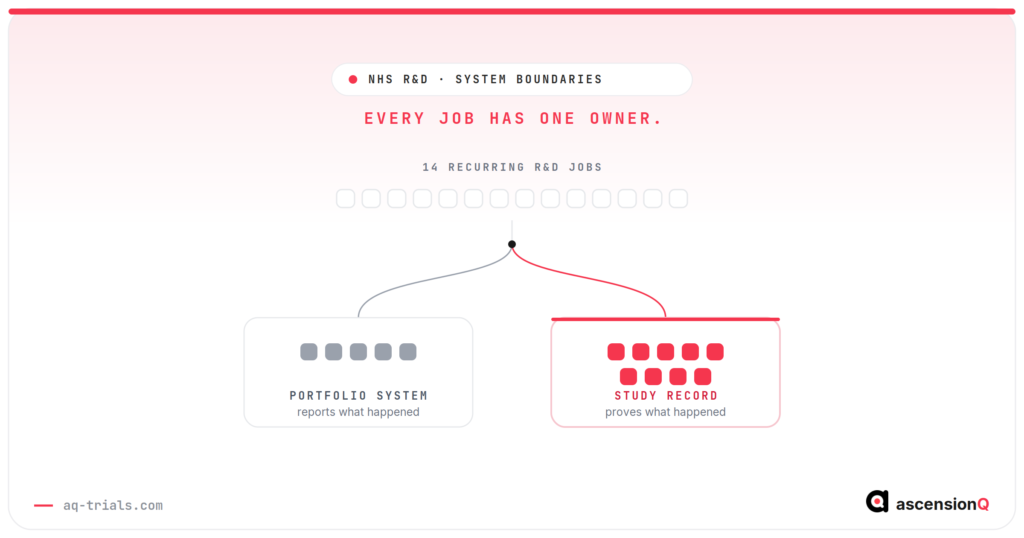
Edge holds an organisation’s research portfolio. A CTMS holds the conduct of the studies inside it. This guide sets out the two obligations that separate them, allocates fourteen NHS R&D jobs to a single owner each, and shows what a record with two owners costs at inspection.
REDCap vs CTMS: Where Data Capture Ends and Study Management Begins
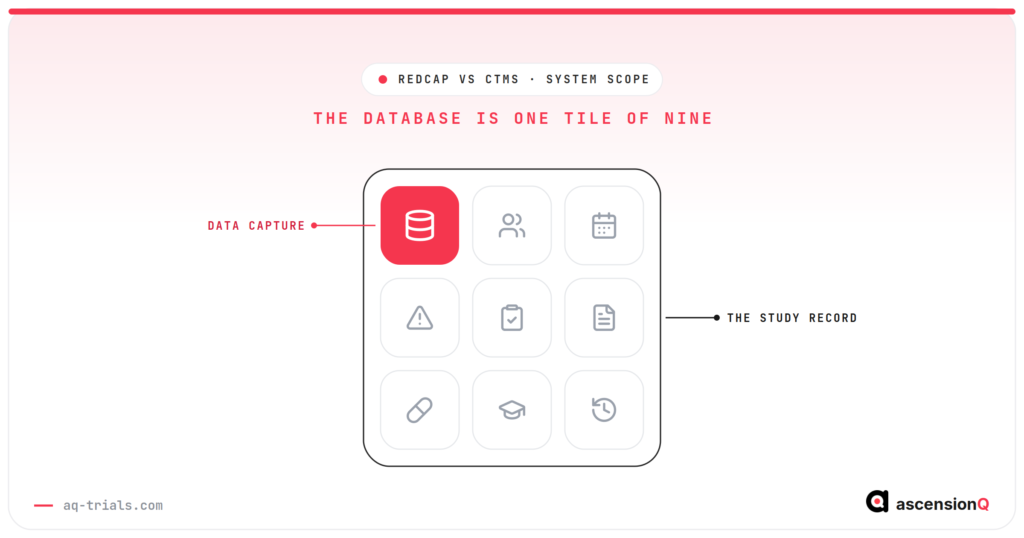
REDCap holds the values a study collects. A clinical trial management system holds the conduct of the study around them. This guide compares the two on scope, licensing, validation and support from published sources, and maps the four ICH-GCP E6(R3) provisions that decide where each piece of evidence sits.
CTMS for NHS R&D: Choosing an Inspection-Ready Platform
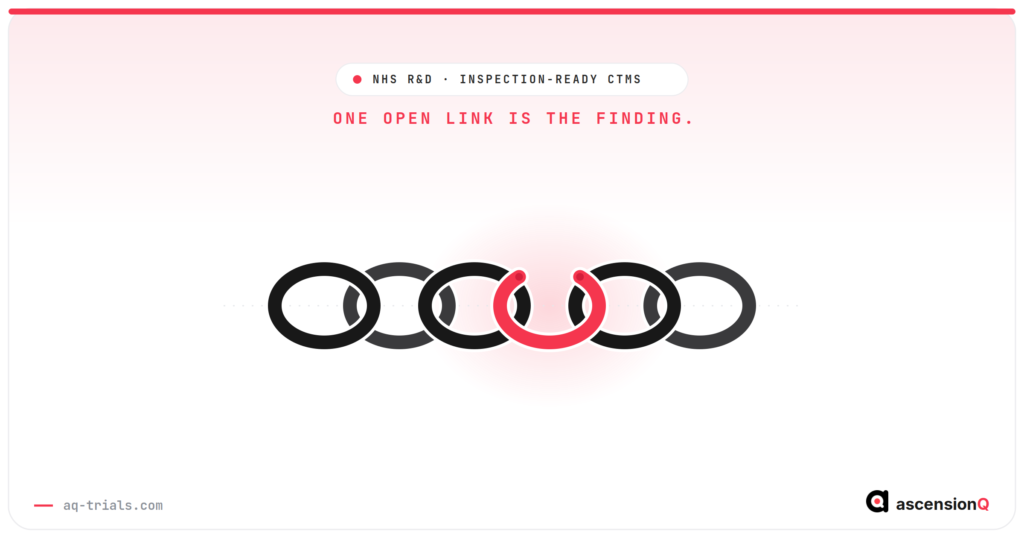
An inspection-ready CTMS for NHS R&D is one where the study record itself is the evidence. This guide covers what the MHRA requests from a trust, the nine attributes that make a study management record inspection-grade, where the evidence chain breaks, what ICH-GCP E6(R3) expects of computerised systems, and an eight-part readiness rehearsal.
Edge Alternatives for NHS Research: Evaluating the Inspection-Readiness Layer
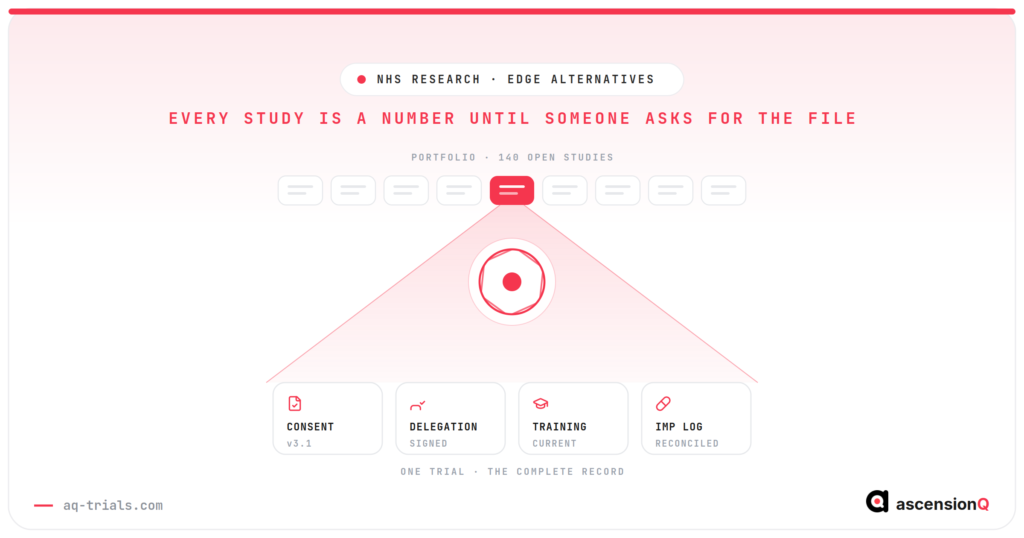
Edge alternatives fall into two groups: systems that replace the local portfolio record, and systems that hold the regulatory evidence a trial is inspected against. This guide covers what Edge states about its own scope, the four conditions that send NHS teams looking, what changed on 28 April 2026, and the questions to put to any vendor.
REDCap Alternatives for Clinical Trial Management in 2026
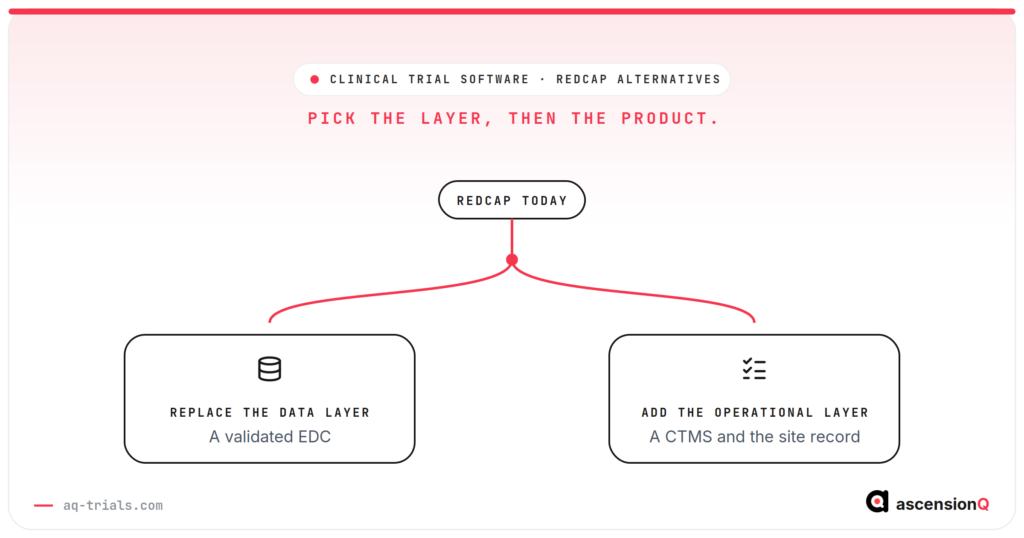
REDCap alternatives divide into two categories: systems that replace the data layer, and systems that add the operational layer around it. This guide covers what REDCap states about its own scope, licensing, support and compliance responsibility, the four conditions that send teams looking in 2026, and how to plan a move.
Clinical Trial Management Software for NHS Trusts: 2026 Buyer’s Guide
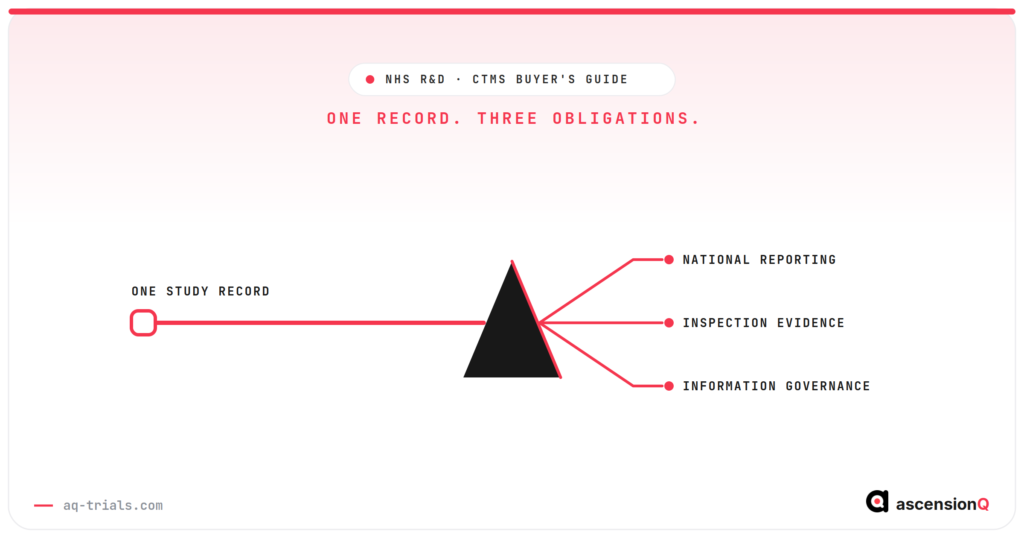
A clinical trial management system for an NHS trust has to satisfy national delivery reporting, MHRA inspection and NHS information governance from one record. This 2026 buyer’s guide covers the six CPMS milestone fields, the DSPT, Cyber Essentials and DTAC assurance stack, what ICH-GCP E6(R3) requires of computerised systems, and the questions to ask before shortlisting.
{“_yoast_wpseo_title”: “Clinical Trial Management Software for NHS Trusts: 2026 Buyer’s Guide”, “_yoast_wpseo_metadesc”: “How an NHS trust should buy a clinical trial management system in 2026: the six CPMS milestone fields, the DSPT, Cyber Essentials and DTAC assurance stack, ICH-GCP E6(R3), and the questions to ask suppliers.”, “_yoast_wpseo_focuskw”: “clinical trial management system nhs”}