E-Planner Explained: Visit Diaries and Scheduling Inside a CTMS
Clinical trial visit scheduling software books every appointment against the visit window the protocol defines. This guide explains what a visit window is, why visits drift outside it, what a single out-of-window visit costs in records, and how a CTMS applies the compliance check before the booking.
Recruitment Visibility: How a CTMS Tracks Enrolment in Real Time
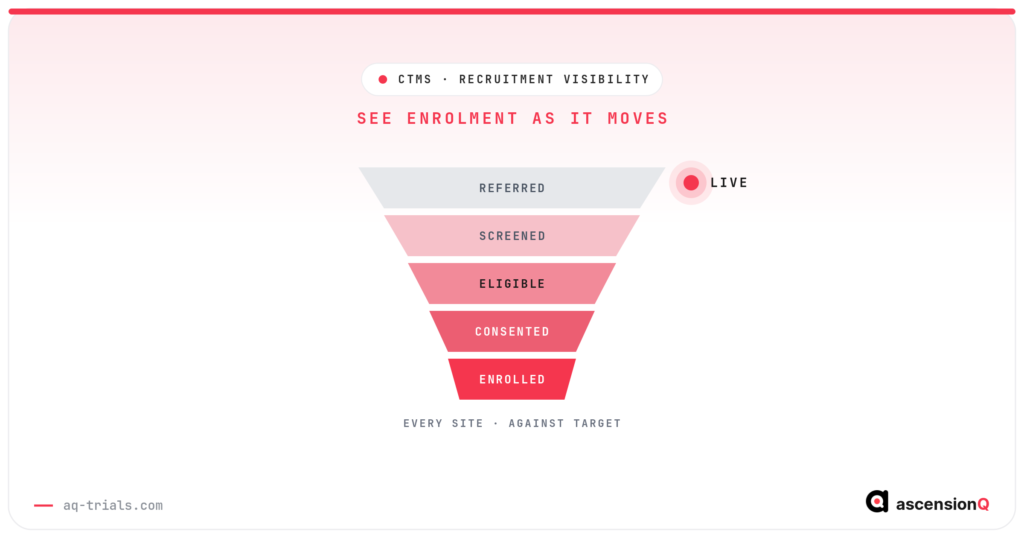
Clinical trial recruitment tracking software shows screening and enrolment against target in real time. This guide explains what recruitment tracking measures, why weekly email counts fail busy sites, which metrics a study team should watch, and how a CTMS gives live per-site enrolment visibility across every study site.
AQ vs Veeva, Florence, RealTime and SharePoint: Choosing Connected Clinical Trial Software
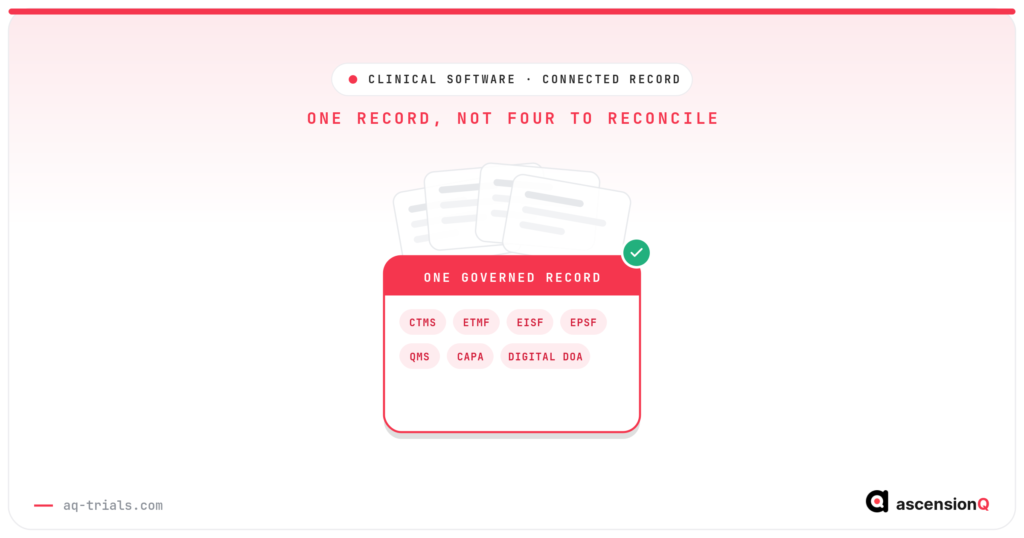
Comparing Veeva, Florence, RealTime and SharePoint means comparing four answers to one problem: whether your systems produce a single governed study record or several to reconcile. This guide maps each to its category, compares them on the dimensions that decide oversight, and shows what to evaluate.
CTMS vs Spreadsheets: Why Site Capacity Planning Breaks Without One
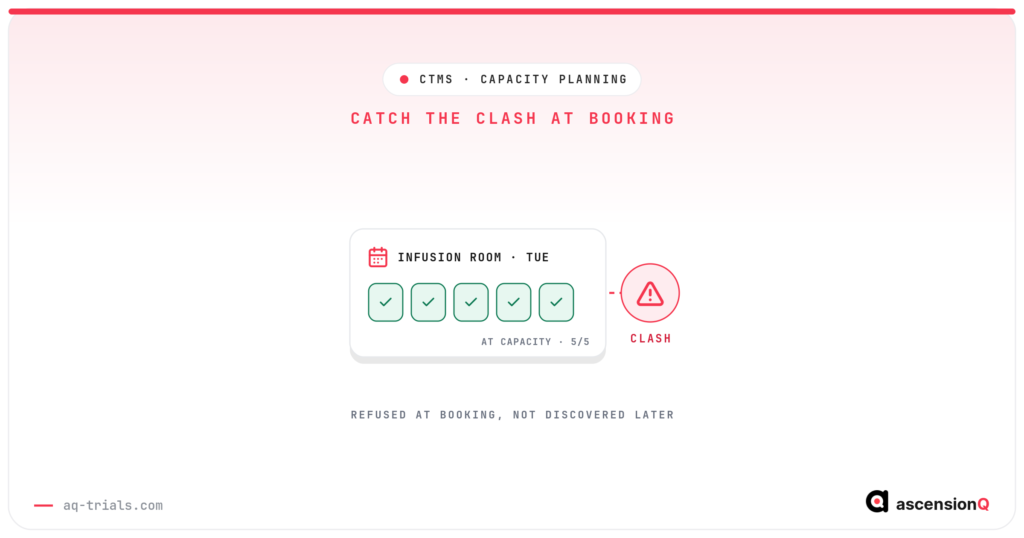
Clinical trial capacity management means matching committed study workload to the staff, rooms and time a site actually has. A spreadsheet records those commitments. A CTMS controls them at the point each one is made. This guide explains why capacity planning breaks on spreadsheets, what ICH-GCP E6(R3) section 2.2 expects, and what changes with a CTMS.
{“_yoast_wpseo_title”: “CTMS vs Spreadsheets: Why Site Capacity Planning Breaks”, “_yoast_wpseo_metadesc”: “Clinical trial capacity management fails on spreadsheets because they record commitments they cannot control. See how a CTMS prevents capacity clashes.”, “_yoast_wpseo_focuskw”: “clinical trial capacity management”}
What Is Clinical Research Software and How to Choose the Right One?
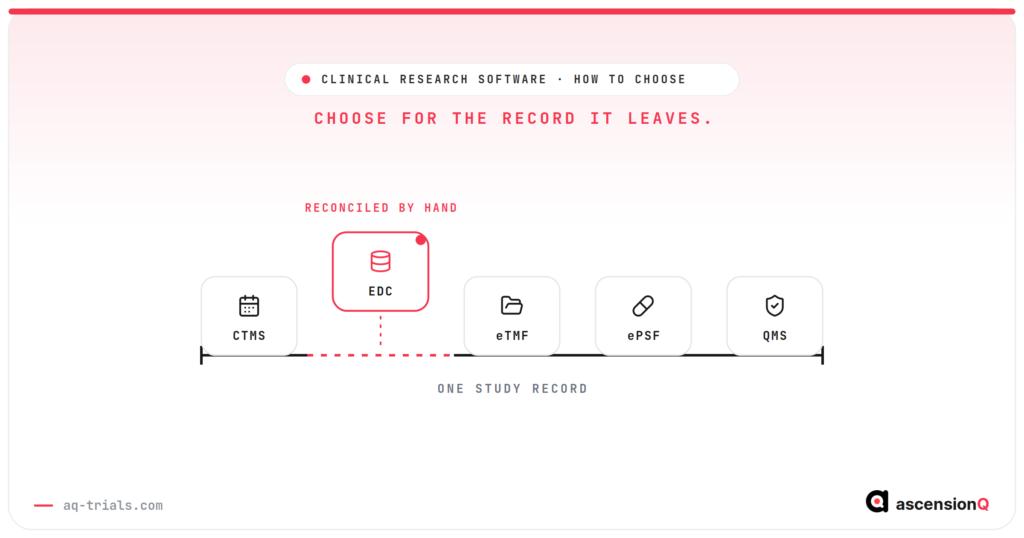
Clinical trial software is the set of fifteen validated systems a study team uses to plan, run, document and evidence a trial, from CTMS and EDC to eTMF and eISF. This guide covers what each system is and records, what the 2026 UK rule changes require of it, and how to choose the right system on the evidence it leaves.
How Much Does a Clinical Trial Management System Cost?
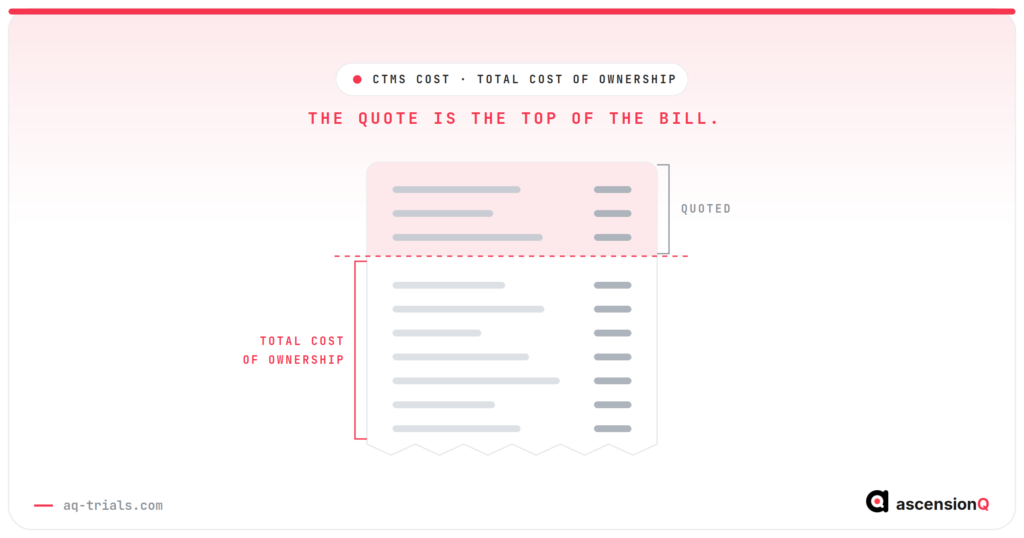
A CTMS is quoted as one price and paid for in three parts: the subscription, the one-off work that puts the system into use, and the recurring effort a team spends keeping records aligned. This guide covers the twelve lines that make up a CTMS bill, the five pricing models, what April 2026 changed, and how to compare two quotations.
Who Uses CTMS Solutions and Why?
The implementation of cutting-edge tools is transforming the way professionals manage and conduct clinical trials, right? CTMS is at the forefront of this technological revolution. From pharmaceutical companies to academic institutions and research organisations, everyone uses CTMS solutions, as these are designed to: Let’s discuss in detail who uses CTMS solutions and why. 1. Clinical […]
5 Tips for a Successful Integration of CTMS with EDC
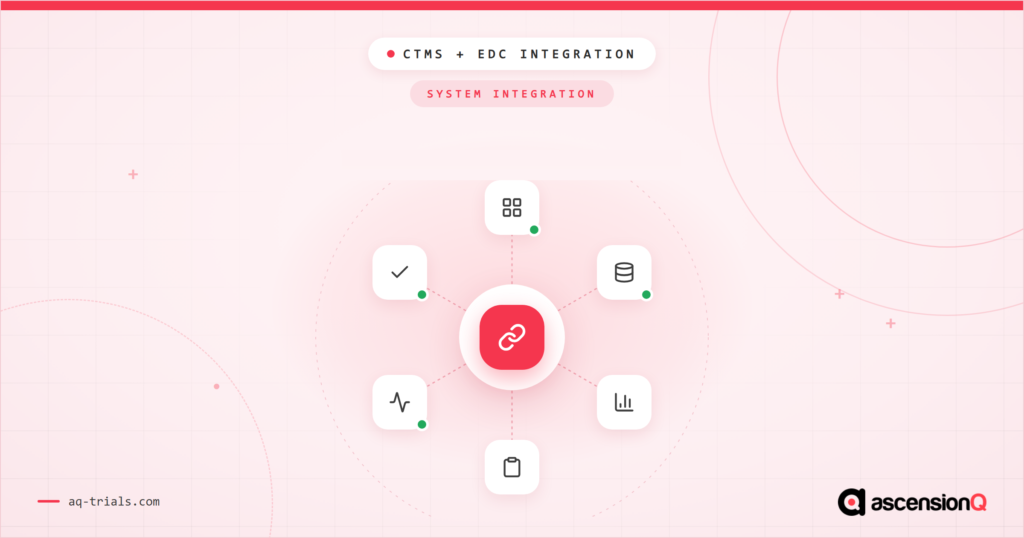
Clinical Trial Management Systems (CTMS) and Electronic Data Capture (EDC) systems play crucial roles in the efficient conduct of clinical trials. Integrating these systems can streamline processes, improve data quality, and enhance overall trial management. Here are some tips for successful integration of CTMS with EDC: Define Integration Goals Integration goals are important to specify […]
How to Implement and Use CTMS?
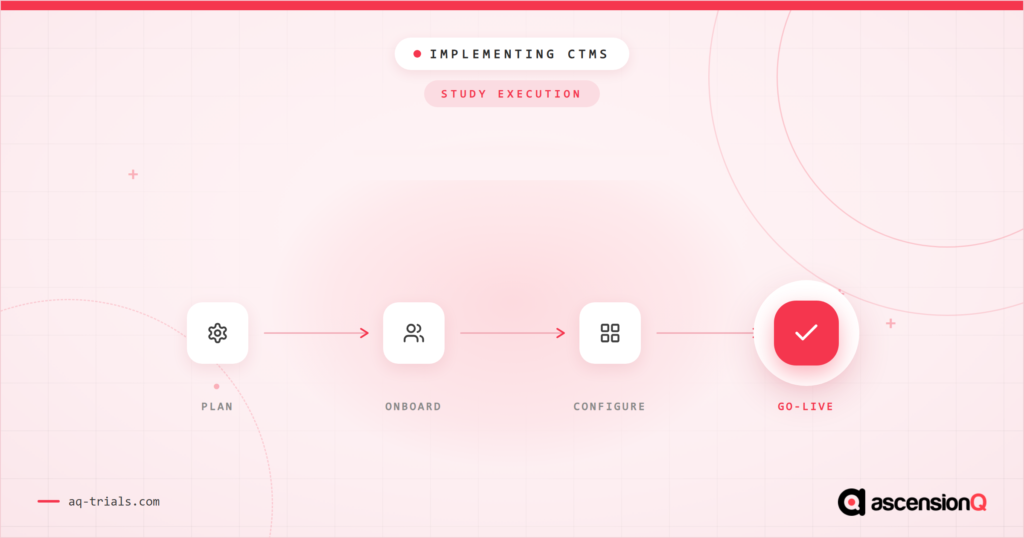
The successful implementation and utilisation of a CTMS demand strategic planning and execution backed by ongoing adaptation, feedback loops, and a commitment to leveraging technology for the betterment of medical research. This comprehensive guide will walk you through the key steps involved in implementing and effectively using a CTMS, ensuring a seamless and efficient clinical […]
CTMS vs EDC: What Is the Difference in Clinical Research?
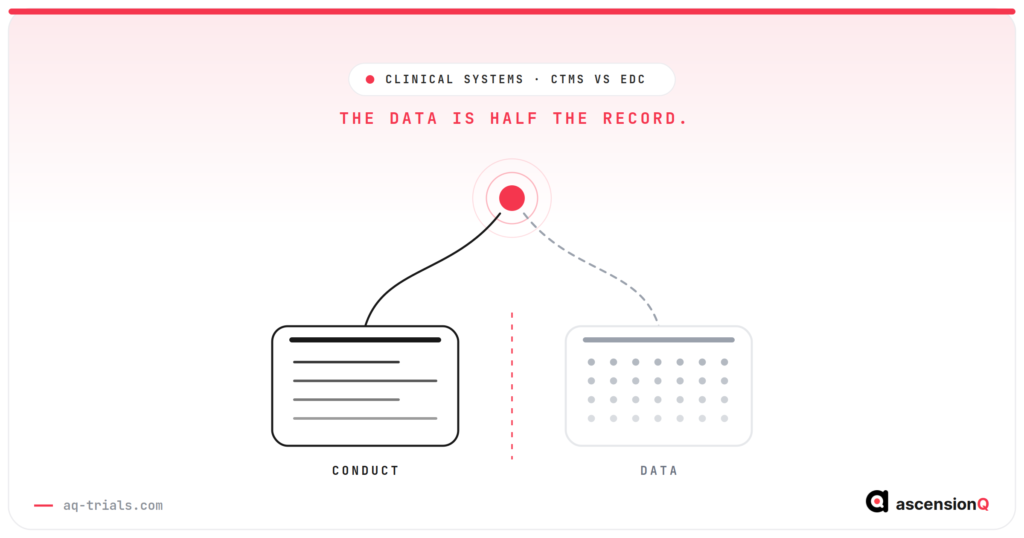
An EDC system holds the data a clinical trial collects about its participants. A CTMS holds the conduct of the trial that produced it. This guide routes fifteen study records to the system that owns them, and covers what the UK rules in force since 28 April 2026 require of each.