Paper Accountability Logs vs an Electronic Pharmacy Record
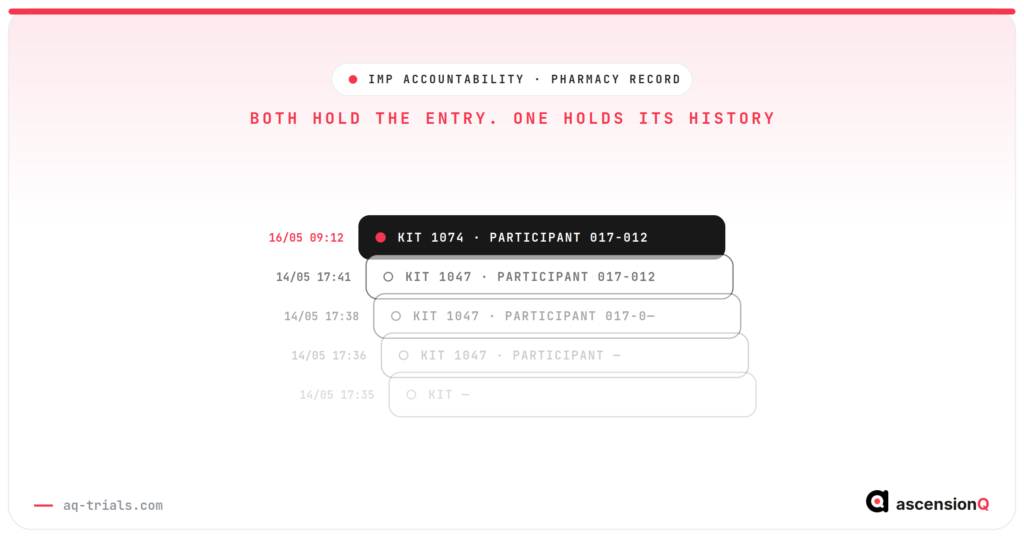
A paper accountability log and an electronic pharmacy record hold the same facts about the same units of IMP. This guide compares them on where errors enter, how a correction is made, what a retrospective reconciliation costs, the storage and retrieval effort, and the monitoring effort.
RTSM and IRT vs the Pharmacy Record: Which Holds What?
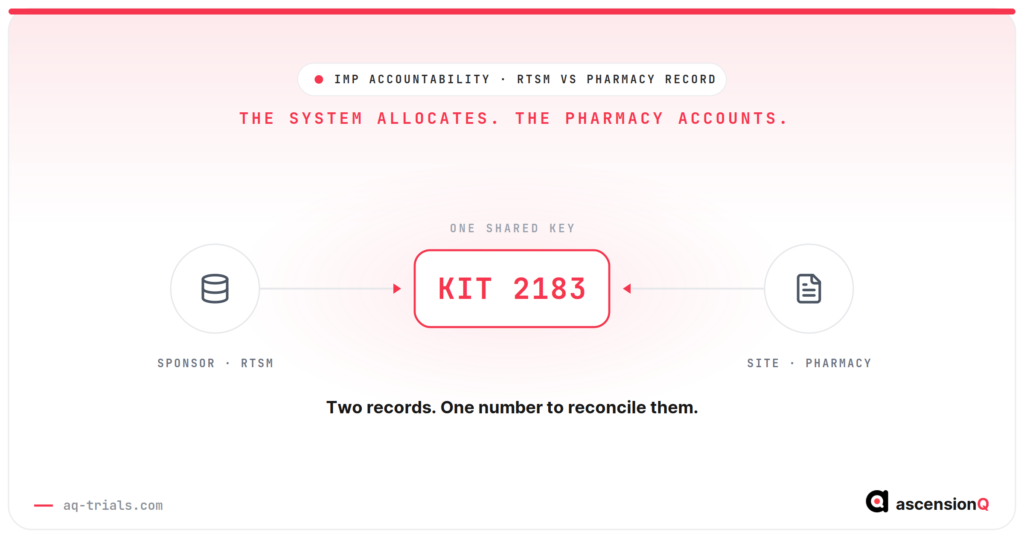
An RTSM or IRT system holds the sponsor’s randomisation, kit allocation and study-wide supply position. The site pharmacy record holds custody of the units that arrived and what pharmacy did with each. This guide covers what each owns, the four handover points, and why a site keeps its own ledger.
IMP Accountability in Clinical Trials: A Complete Guide for UK Pharmacy Teams
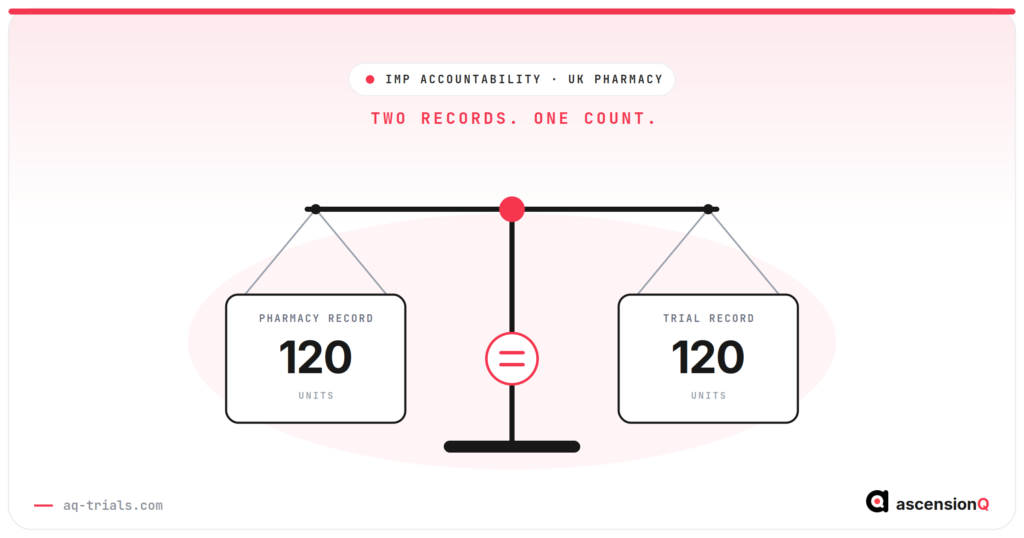
IMP accountability in clinical trials is the unit-by-unit record proving where every investigational medicinal product at a site went. This guide covers what counts as an IMP, what the record must reconcile, who is accountable, what UK law and ICH E6(R3) require, where the record breaks, and reconciliation.
When Should an eSource Error Become a Protocol Deviation or a CAPA?
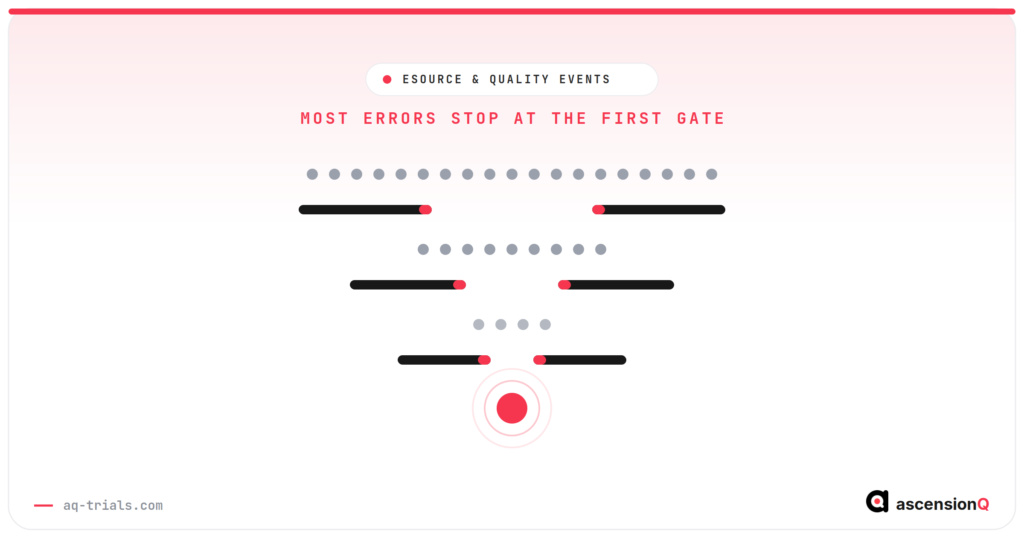
An eSource error becomes a protocol deviation when the conduct departed from the protocol, and a CAPA when the cause is systemic and likely to recur. This guide covers the four outcomes one error can have, the test that makes a deviation important, the serious breach threshold and how the decision is recorded.
How to Correct an eSource Entry Without Breaking ALCOA+
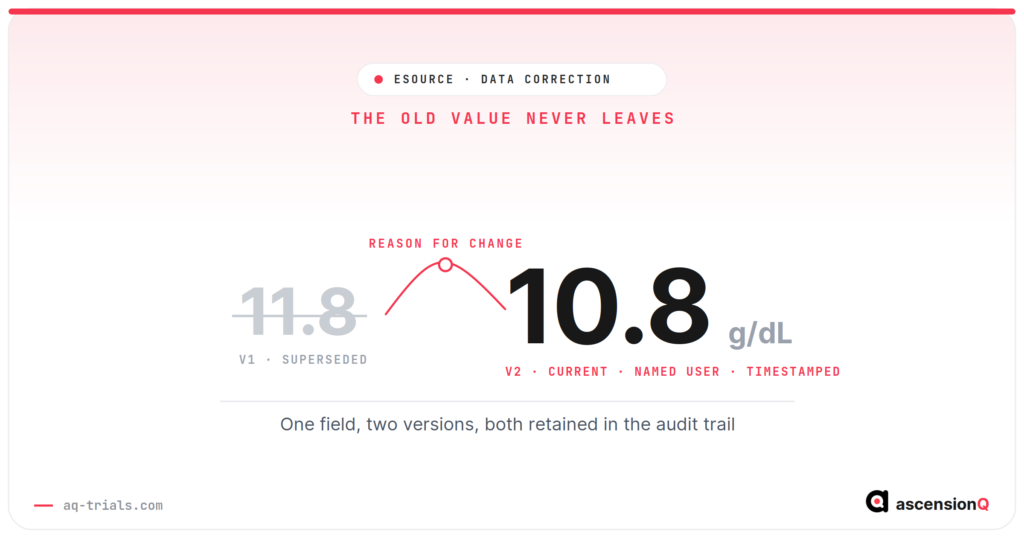
An eSource entry is corrected by saving the new value as a new version of the field, leaving the original readable, and recording who changed it, when and why. This guide covers who may correct an entry, the seven steps of the workflow, what makes a reason for change defensible, and how late a correction can be made.
How to Validate an eSource System Before First Patient In
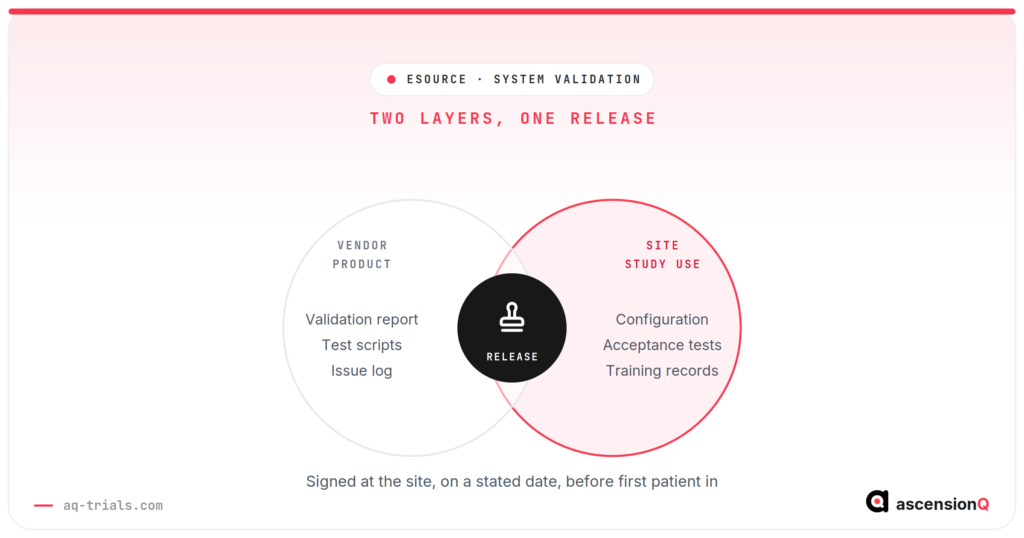
A site validates an eSource system by proving in writing that it meets the study’s requirements. This guide covers the vendor and site split, how to assess vendor evidence, what user requirements must cover, what user acceptance testing checks, and the ten documents filed before first patient in.
What MHRA Expects from Electronic Source Systems Under the 2026 UK Regulations
The MHRA expects an electronic source system to produce the original record together with the metadata that proves who entered it, when, and what changed since. This guide covers the statutory duty that began on 28 April 2026, the data integrity definitions inspectors use, and the audit trail findings they publish.
How Does ICH E6(R3) Change the Rules for eSource?
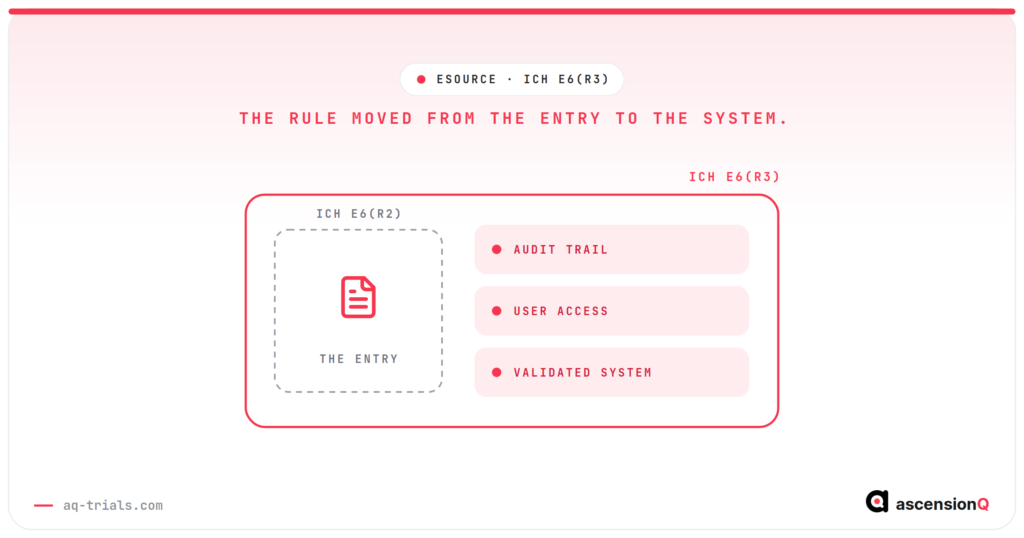
ICH E6(R3) folds source data and source documents into one term, source records, requires the site to define what counts as source before the trial starts, and adds a data governance section that governs the system holding the record. This guide covers the clauses that apply to electronic source capture.
Does eSource Meet ALCOA+? The Attributes Inspectors Check

eSource meets ALCOA+ where the system is validated and configured to earn each of the nine attributes. This guide maps every attribute to the eSource control that evidences it, shows which four the system settles and which five stay with the site, and covers the record an inspector opens to test each one.
CAPA Software for NHS Research: Deviations and MHRA Readiness
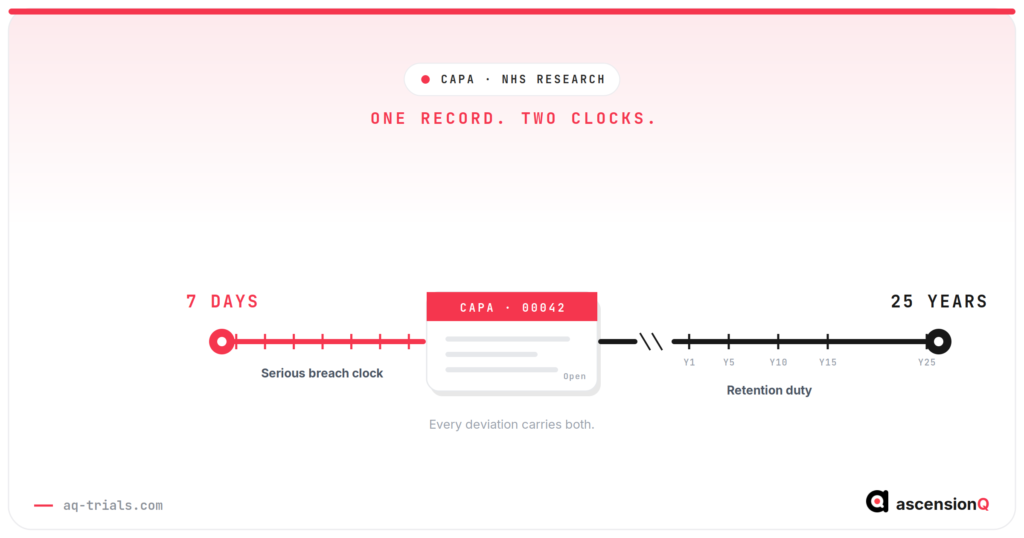
CAPA software for NHS research holds the corrective and preventive action record for every clinical trial a trust runs. This guide covers the three ICH-GCP E6(R3) provisions that bind the quality system, the seven-day serious breach clock under regulation 29A, the six stages of a governed CAPA record, and how far one graded MHRA finding can travel.