What MHRA Expects from Electronic Source Systems Under the 2026 UK Regulations
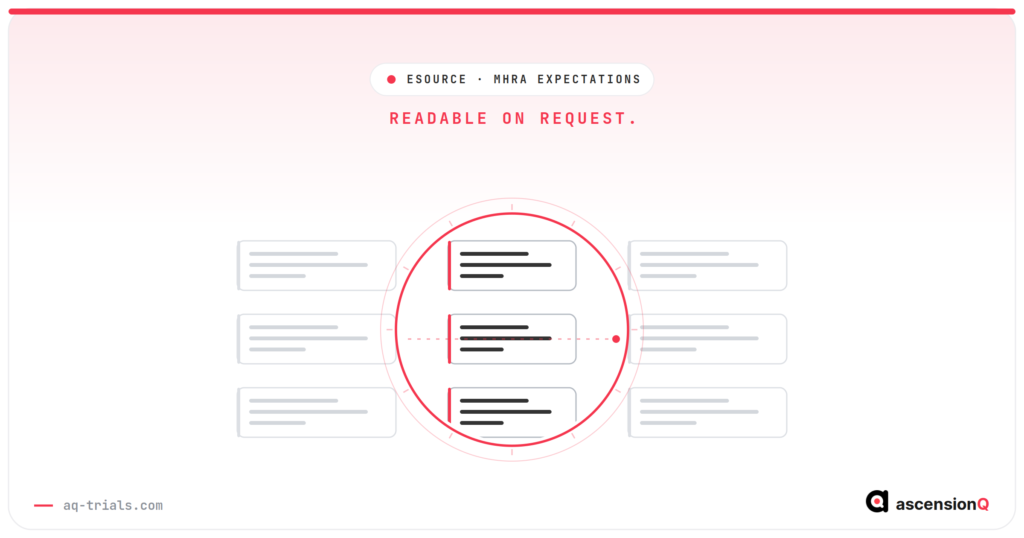
The MHRA expects an electronic source system to produce the original record together with the metadata that proves who entered it, when, and what changed since. This guide covers the statutory duty that began on 28 April 2026, the data integrity definitions inspectors use, and the audit trail findings they publish.
How Does ICH E6(R3) Change the Rules for eSource?
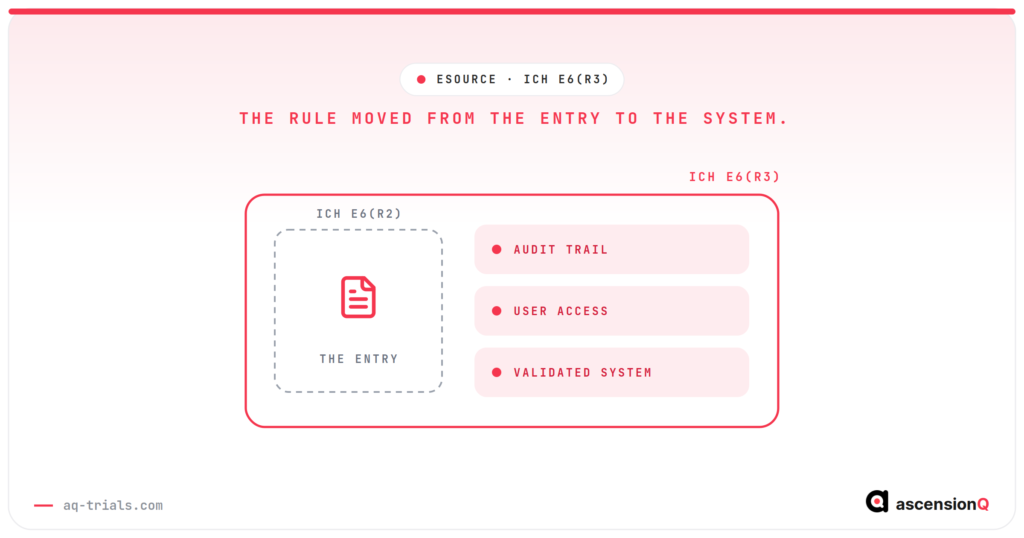
ICH E6(R3) folds source data and source documents into one term, source records, requires the site to define what counts as source before the trial starts, and adds a data governance section that governs the system holding the record. This guide covers the clauses that apply to electronic source capture.
Does eSource Meet ALCOA+? The Attributes Inspectors Check
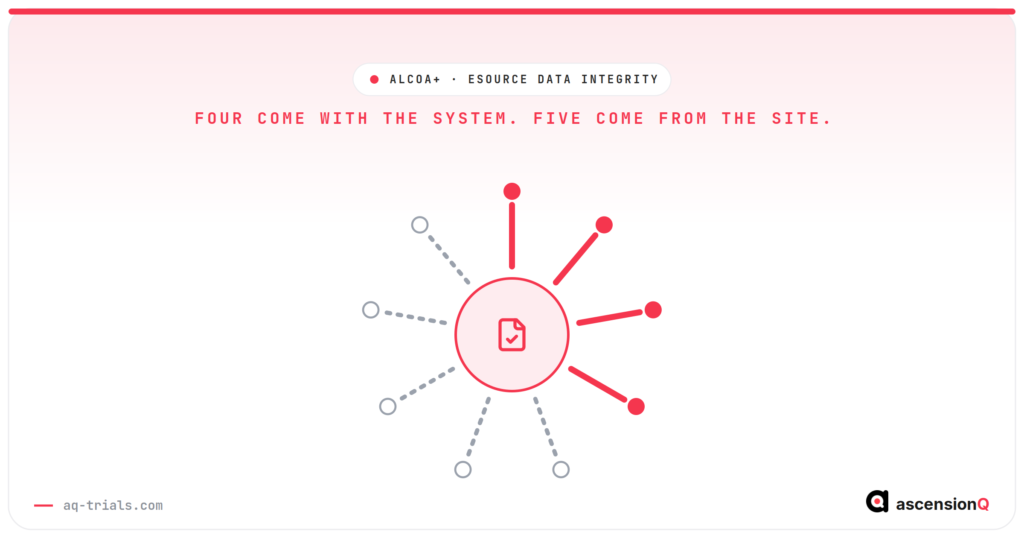
eSource meets ALCOA+ where the system is validated and configured to earn each of the nine attributes. This guide maps every attribute to the eSource control that evidences it, shows which four the system settles and which five stay with the site, and covers the record an inspector opens to test each one.
CAPA Software for NHS Research: Deviations and MHRA Readiness
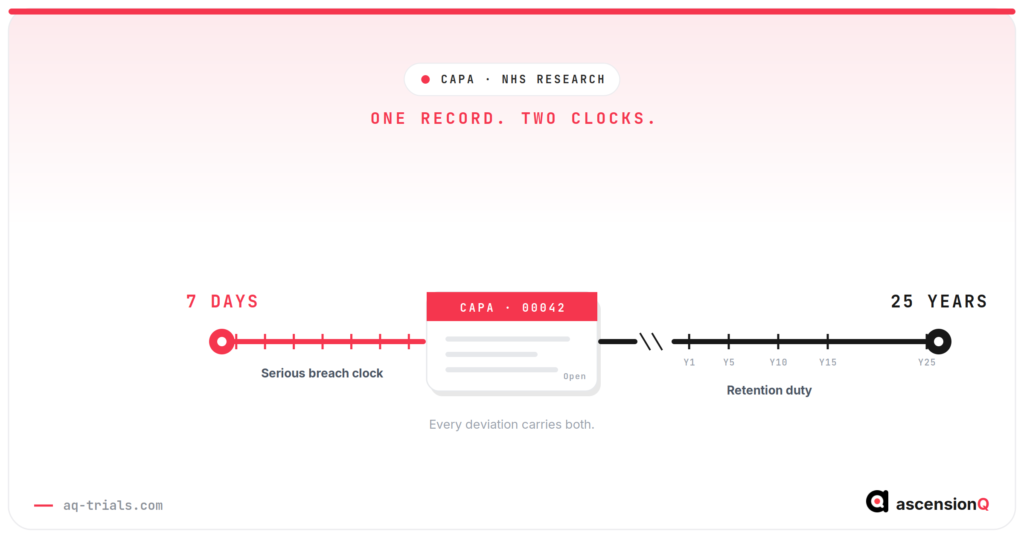
CAPA software for NHS research holds the corrective and preventive action record for every clinical trial a trust runs. This guide covers the three ICH-GCP E6(R3) provisions that bind the quality system, the seven-day serious breach clock under regulation 29A, the six stages of a governed CAPA record, and how far one graded MHRA finding can travel.
CAPA Effectiveness Verification: Proving the Fix Held
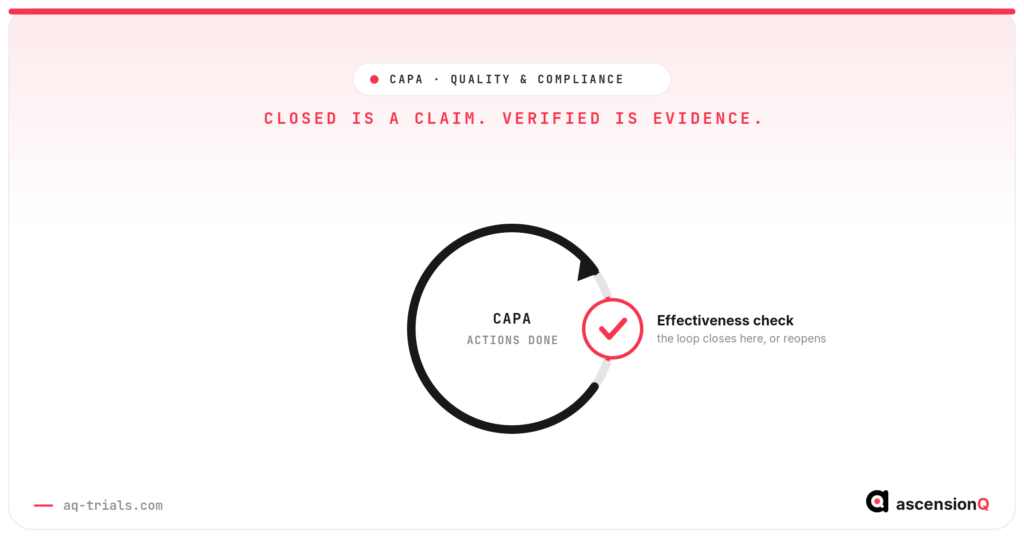
A CAPA effectiveness check proves a completed fix actually held under real operating conditions. This guide explains when to set verification criteria, how to make them testable, which method fits which action, how long the effectiveness window should run, and what a failed check must trigger before a CAPA can close.
GAMP 5 and Computerised System Validation: What QMS Teams Need
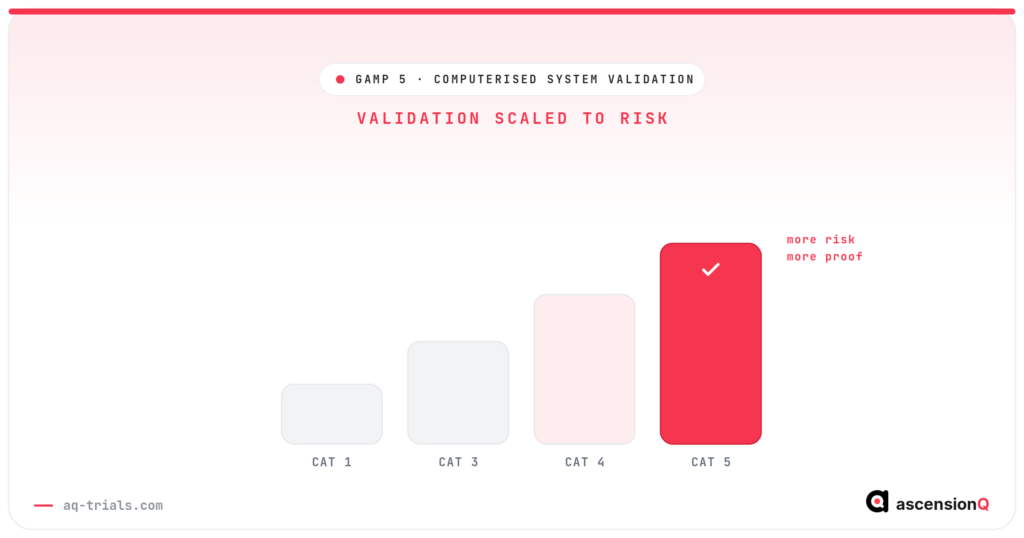
Computerised system validation proves a system does what it should and keeps doing it. GAMP 5 gives clinical research QMS teams a risk-based way to plan that evidence. This guide covers the software categories, the validation lifecycle, and the deliverables an MHRA inspector expects to see.
Investigational Product Storage Records: A Compliance Checklist
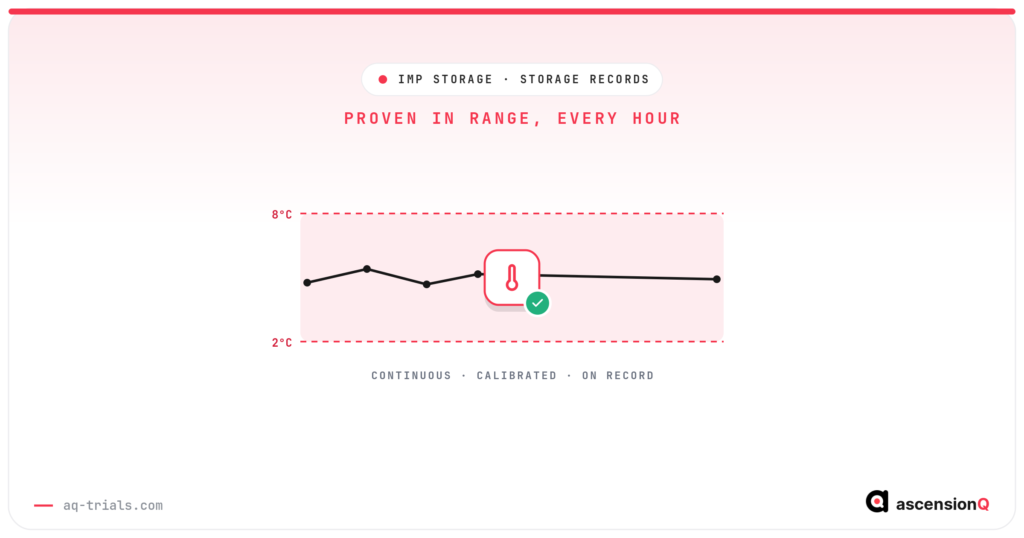
Investigational product storage records prove an IMP was held under its approved conditions for the whole time it was at site. This guide sets out the storage record set, why it fails at inspection, ALCOA+ for temperature data, the excursion workflow, and a compliance checklist grouped by lifecycle stage.
CAPA Example: A Clinical Trial Deviation Walked Through Step by Step
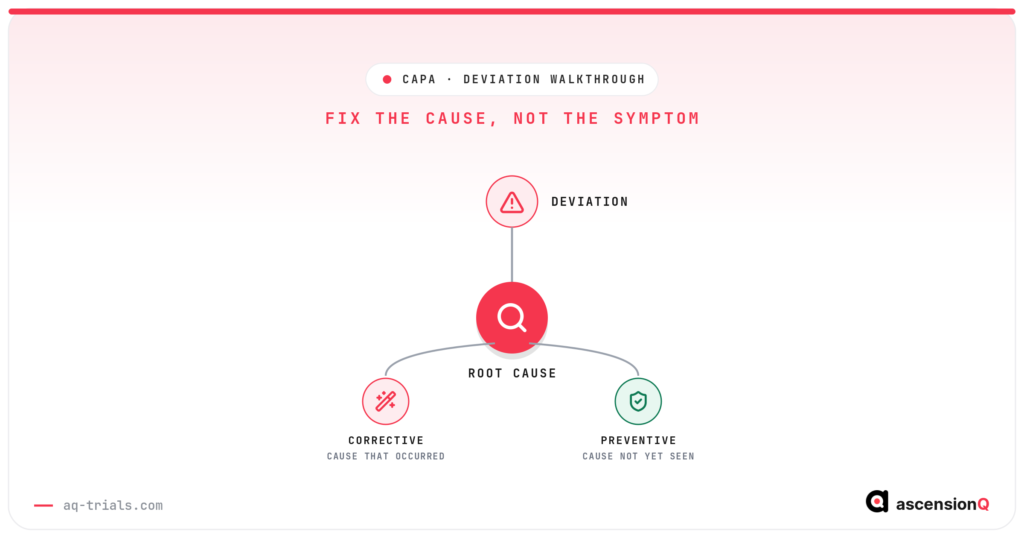
A CAPA example shows what corrective and preventive action looks like in practice: one quality event, traced from detection to verified closure. This guide walks a single clinical trial deviation through all seven stages, with dates, named artefacts, and the judgement calls a QA Lead has to make along the way.
Drug Accountability Logs: What Auditors Actually Check
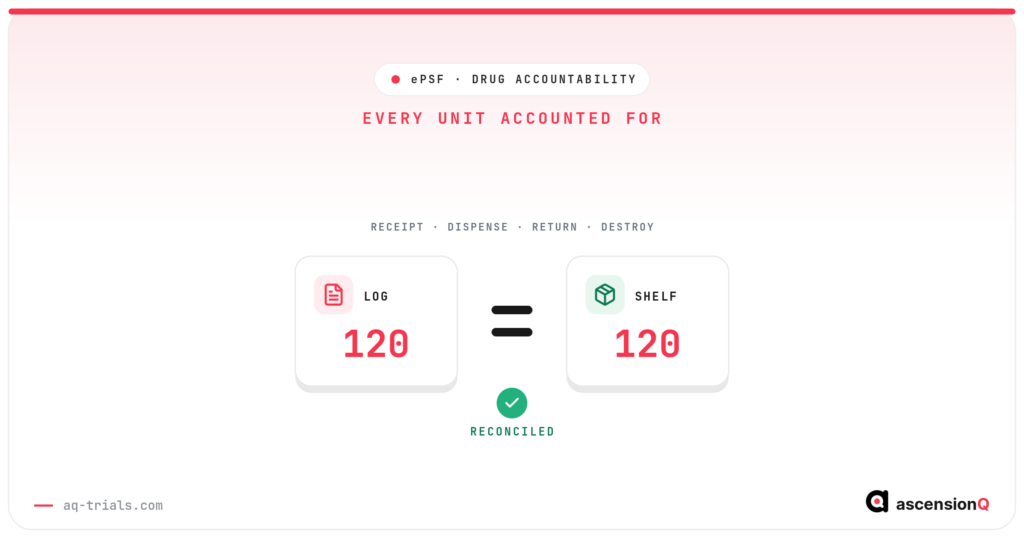
The drug accountability log is where an inspector goes to prove investigational product was controlled. This guide walks the receipt-to-destruction chain, the ALCOA+ rules, reconciliation, and the common findings auditors write, with the control that prevents each.
What is Inspection Readiness in Clinical Trials and How Does It Work Across a CRDC Network?
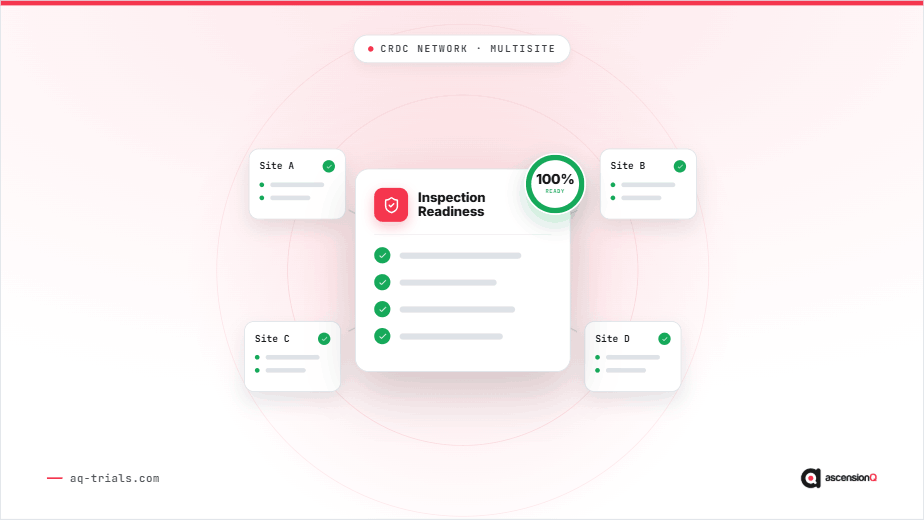
Inspection readiness in clinical research is the condition that exists when every site within a research network can produce complete, accurate, and current evidence of research activity at any point in the study lifecycle, without requiring emergency preparation, manual record reconstruction, or document requests sent to individual teams. This guide explains what inspection readiness means […]