Delegation and Training: Why Who Did It Matters as Much as What Was Done
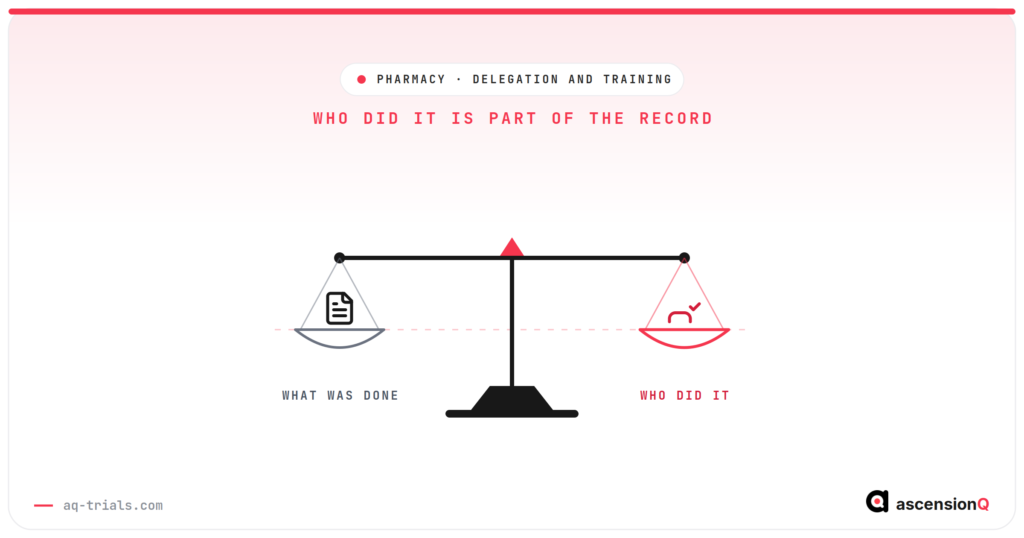
A pharmacy record entry counts as evidence when the person who made it was delegated that activity and trained for it on the day. This guide covers the authorised-and-trained condition, what a delegation log records, which activities need documenting, training currency, and what an inspector asks.
What Does ICH E6(R3) Require of IMP Management at the Site?
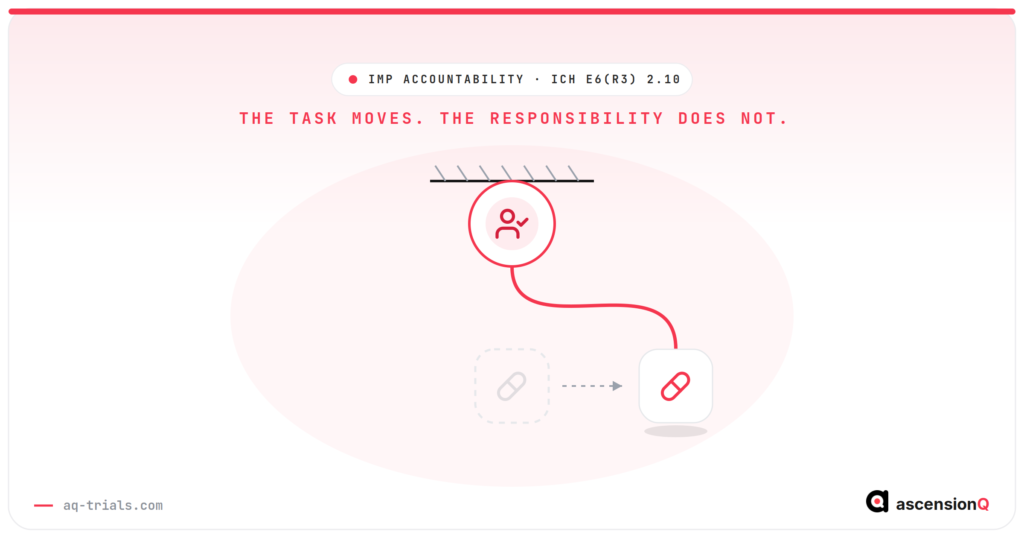
ICH E6(R3) requires the investigator or institution to hold responsibility for IMP management at the site, and section 2.10 sets that duty out in nine clauses. This guide takes each clause as it applies at a UK site, the conditions on delegating to a pharmacist, and where the sponsor’s duty begins.
IMP vs NIMP: Which Products Need Trial-Grade Records?
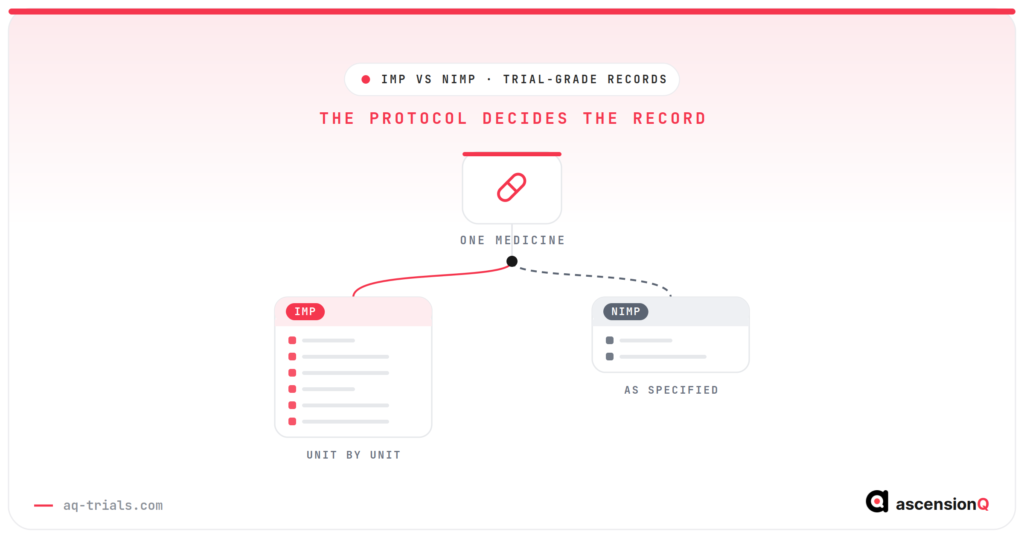
An investigational medicinal product needs a trial-grade record, and a non-investigational medicinal product needs the record its protocol specifies. This guide covers who fixes each product’s class, the record each class attracts at a UK site, and how a misclassification breaks the pharmacy log.
Why the Hospital Pharmacy Stock System Is Not a Trial Record
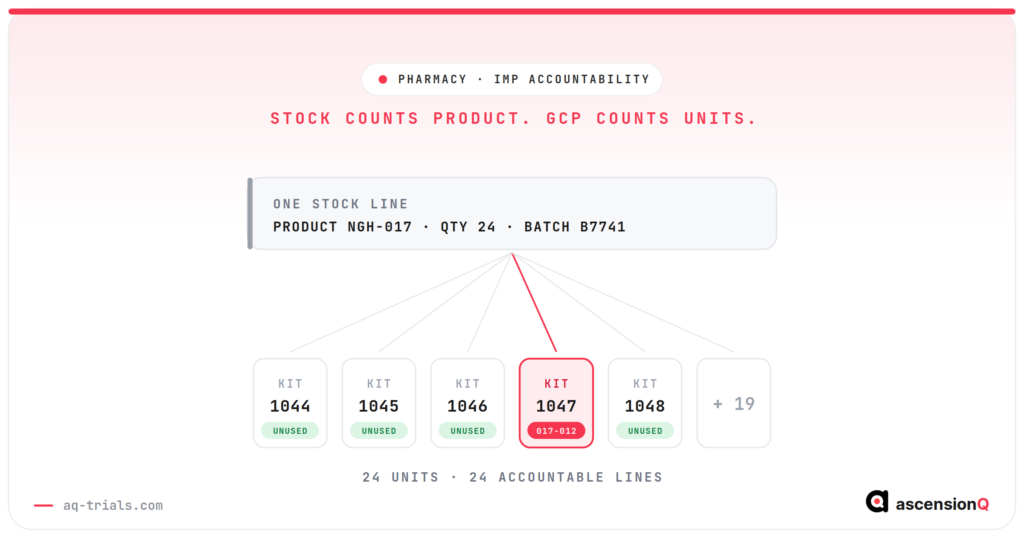
A hospital pharmacy stock system is built to control the trust’s inventory, and a trial record has to account for each numbered unit against a participant. This guide covers what a stock system evidences, the per-participant and audit trail gaps, and how a site holds both records without drift.
Paper Accountability Logs vs an Electronic Pharmacy Record
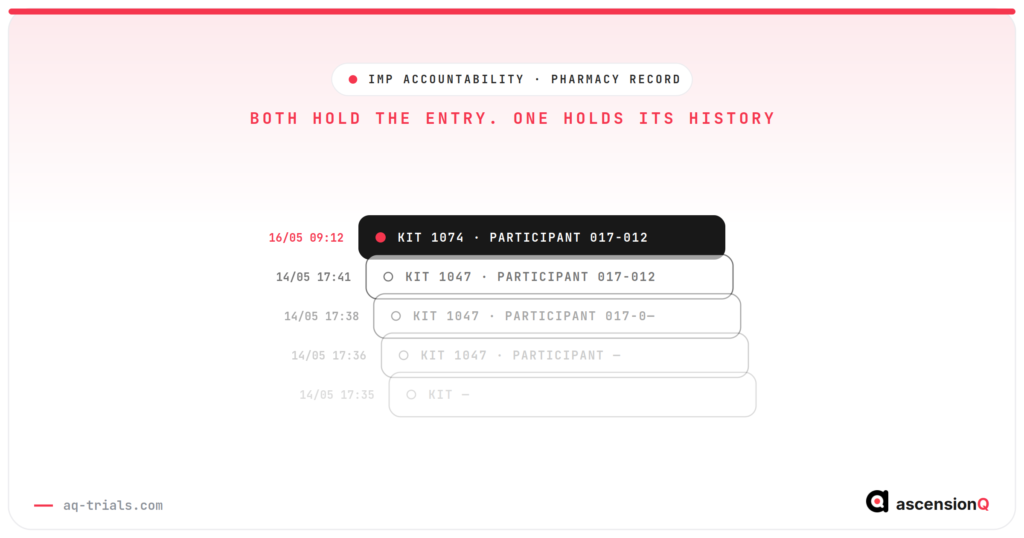
A paper accountability log and an electronic pharmacy record hold the same facts about the same units of IMP. This guide compares them on where errors enter, how a correction is made, what a retrospective reconciliation costs, the storage and retrieval effort, and the monitoring effort.
RTSM and IRT vs the Pharmacy Record: Which Holds What?
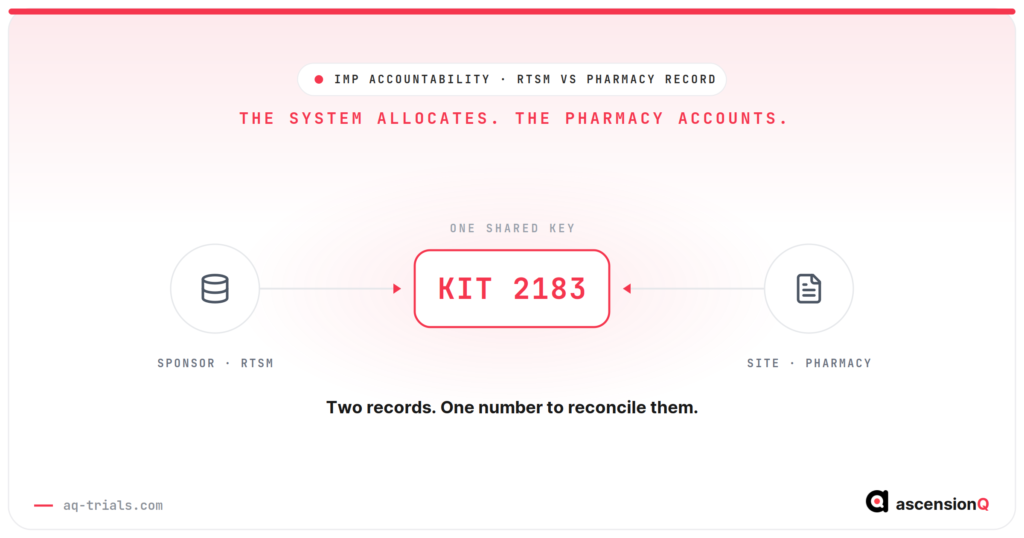
An RTSM or IRT system holds the sponsor’s randomisation, kit allocation and study-wide supply position. The site pharmacy record holds custody of the units that arrived and what pharmacy did with each. This guide covers what each owns, the four handover points, and why a site keeps its own ledger.
IMP Accountability in Clinical Trials: A Complete Guide for UK Pharmacy Teams
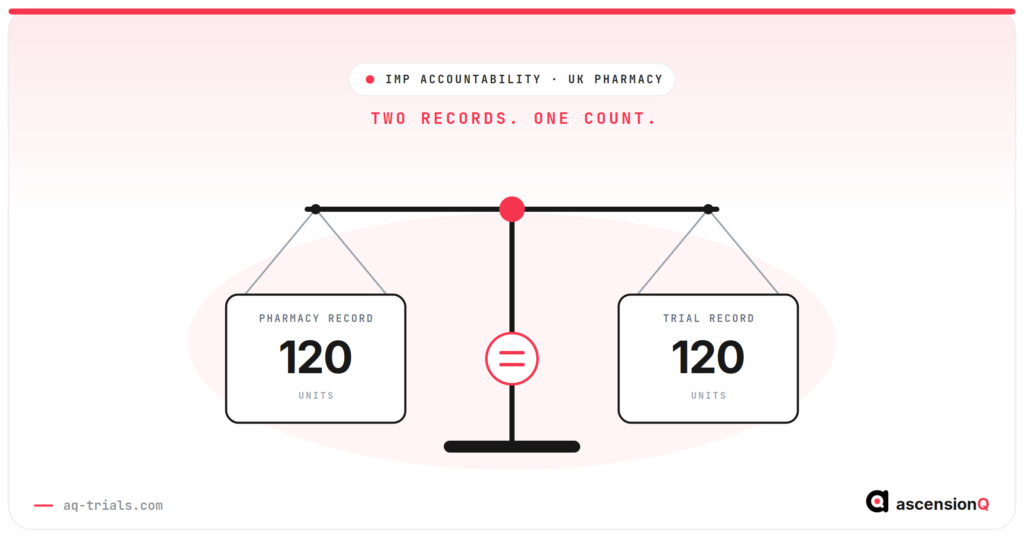
IMP accountability in clinical trials is the unit-by-unit record proving where every investigational medicinal product at a site went. This guide covers what counts as an IMP, what the record must reconcile, who is accountable, what UK law and ICH E6(R3) require, where the record breaks, and reconciliation.
When Should an eSource Error Become a Protocol Deviation or a CAPA?
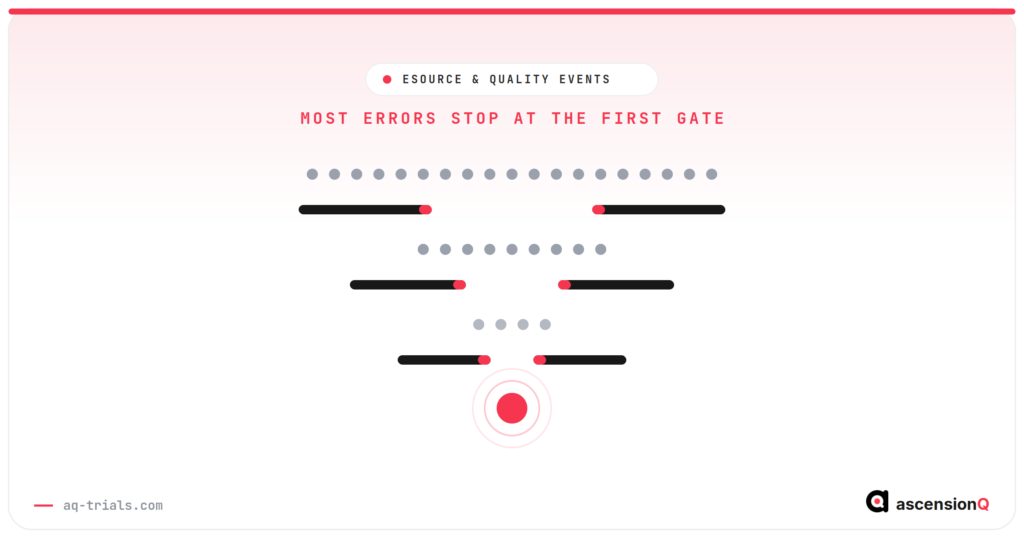
An eSource error becomes a protocol deviation when the conduct departed from the protocol, and a CAPA when the cause is systemic and likely to recur. This guide covers the four outcomes one error can have, the test that makes a deviation important, the serious breach threshold and how the decision is recorded.
How to Correct an eSource Entry Without Breaking ALCOA+
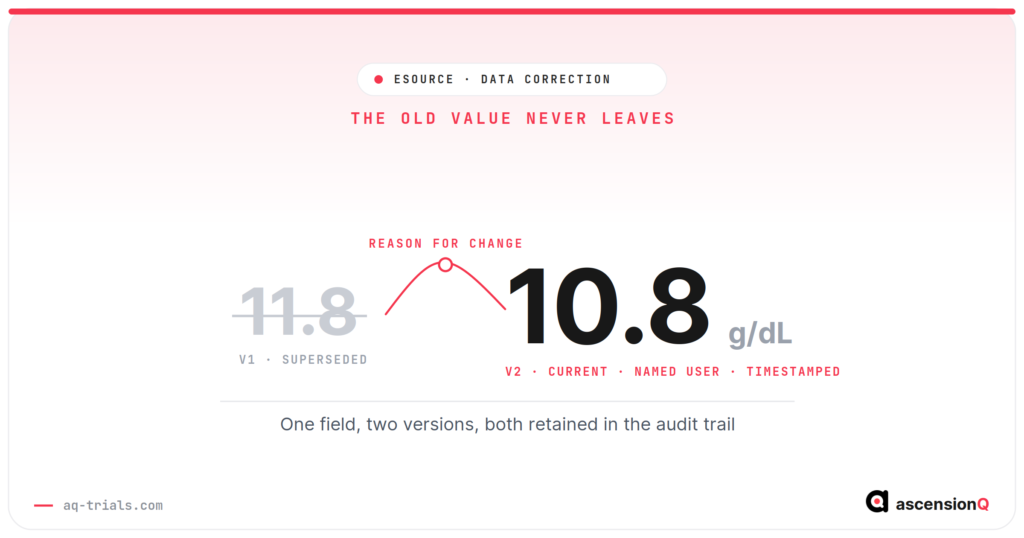
An eSource entry is corrected by saving the new value as a new version of the field, leaving the original readable, and recording who changed it, when and why. This guide covers who may correct an entry, the seven steps of the workflow, what makes a reason for change defensible, and how late a correction can be made.
How to Validate an eSource System Before First Patient In
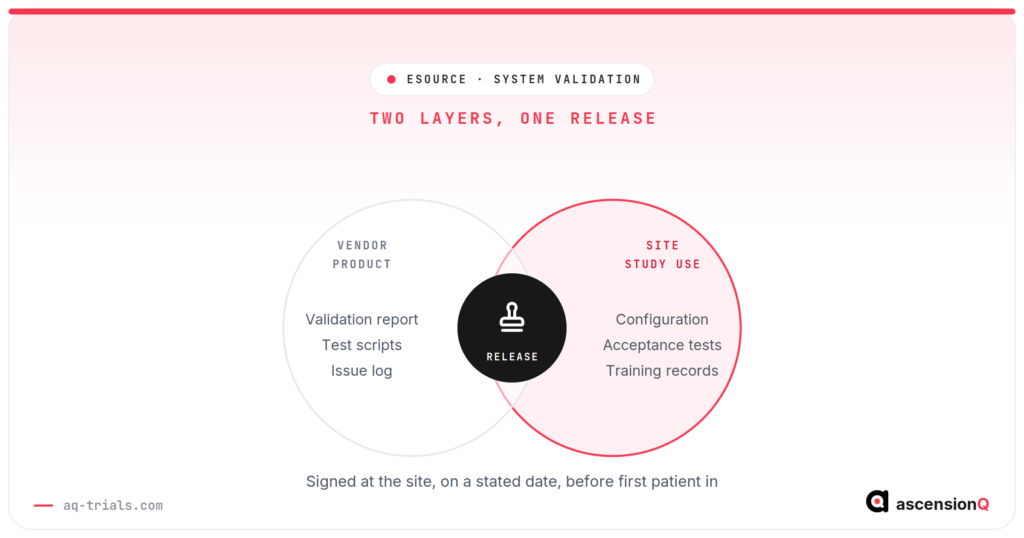
A site validates an eSource system by proving in writing that it meets the study’s requirements. This guide covers the vendor and site split, how to assess vendor evidence, what user requirements must cover, what user acceptance testing checks, and the ten documents filed before first patient in.