AI-Assisted Quality Risk Detection for UK Research Sites
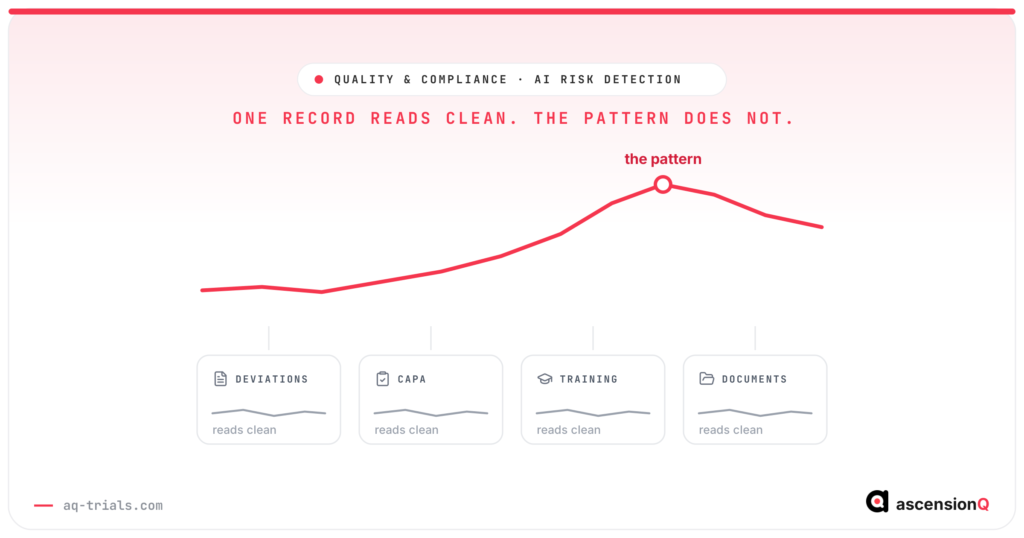
Quality risk detection at a UK research site reads patterns across the deviation log, the CAPA record, the training file and the document register. This guide covers the four signals that appear only across records, what each indicates, the record that confirms it and who decides.
Automation vs AI in a Trial Platform: What a Site Should Expect From Each
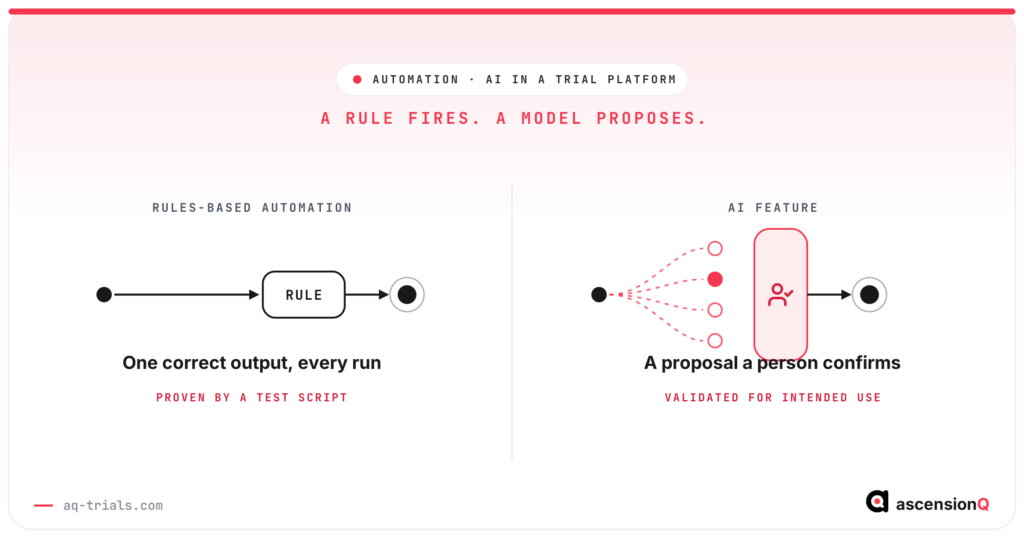
Automation fires a predetermined rule and returns the same output every time, so it needs testing. AI returns a proposal that varies with its input, so it needs a named person to confirm it. This guide classes the features a trial platform ships and the evidence each class attracts.
AI for Compliance and Inspection Readiness: What a UK Site Should Look For in a Platform
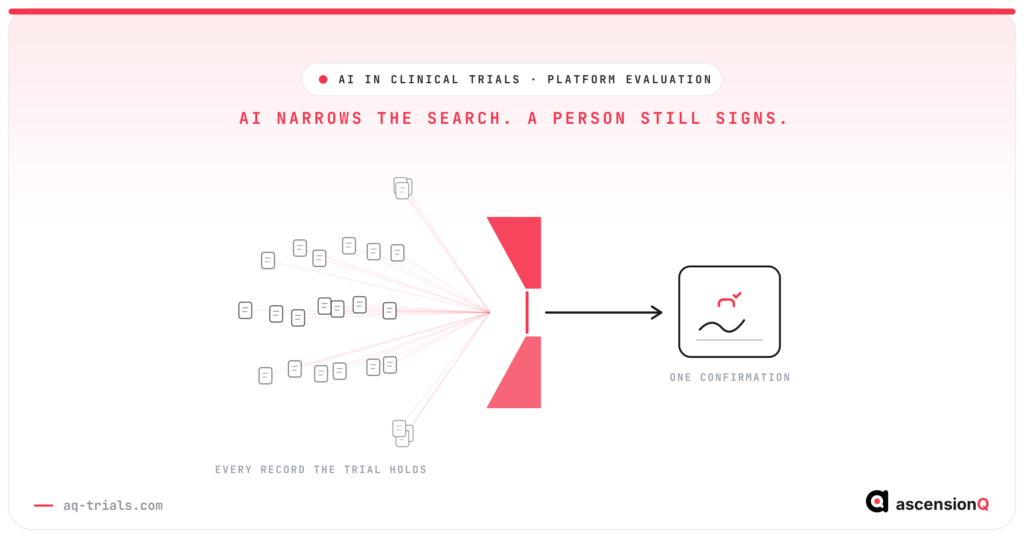
A platform qualifies on AI for compliance and inspection readiness when its AI reads across the connected record, routes every flag to a named owner, and leaves the proposal, the model version and the human confirmation in one audit trail. This guide covers the claim taxonomy, a specification, a weighted scorecard and the demo proof script.
How to Complete the MHRA Computerised Systems Inspection Dossier for Your Site’s Systems
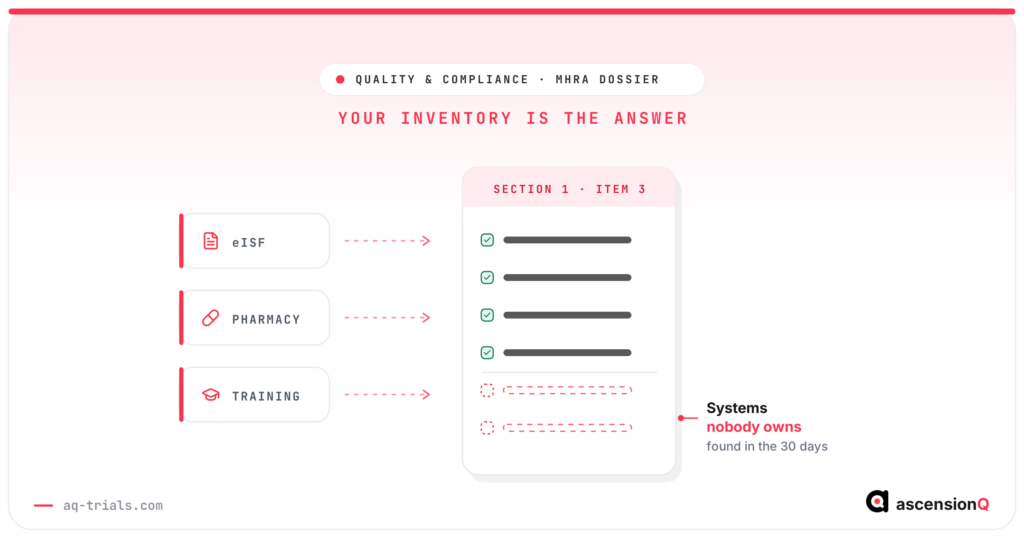
You complete the MHRA computerised systems inspection dossier by listing every system used in your trials with its version, validation status, owner and hosting. This guide covers the five places systems appear in template v7.0, the new Computerised Systems dossier, worked inventory rows and what to ask a vendor.
UK GDPR for Clinical Trial Sites: What Your Systems Must Do
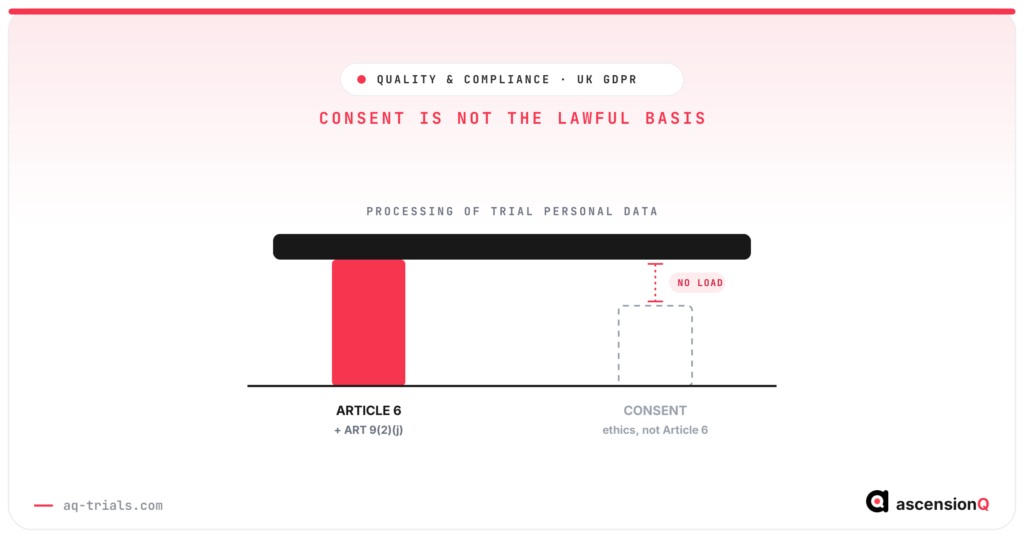
UK GDPR compliance in trials rests on an Article 6 lawful basis of public task or legitimate interests, the Article 9(2)(j) research condition and the Data Protection Act 2018 safeguards. This guide covers the six legal layers, the controller split, what a platform must do, where trial data may be hosted and what the Data (Use and Access) Act 2025 changes.
Is It Safe to Use AI in GxP Clinical Trial Systems? What MHRA Expects
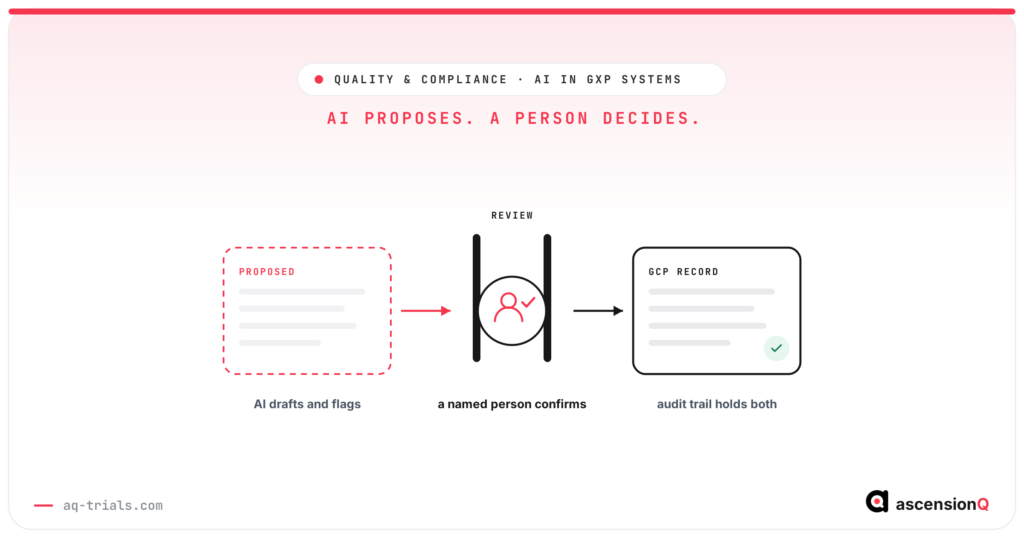
Yes, where the system is validated for its intended use, a named person reviews each output before it becomes a record, and the audit trail shows what the model proposed and who confirmed it. This guide covers what the MHRA has published, the fabricated-citation failure mode, the may and must-never list, the audit trail, change control and the vendor questions.
What Does an MHRA Inspector Look For in a Pharmacy Site File?
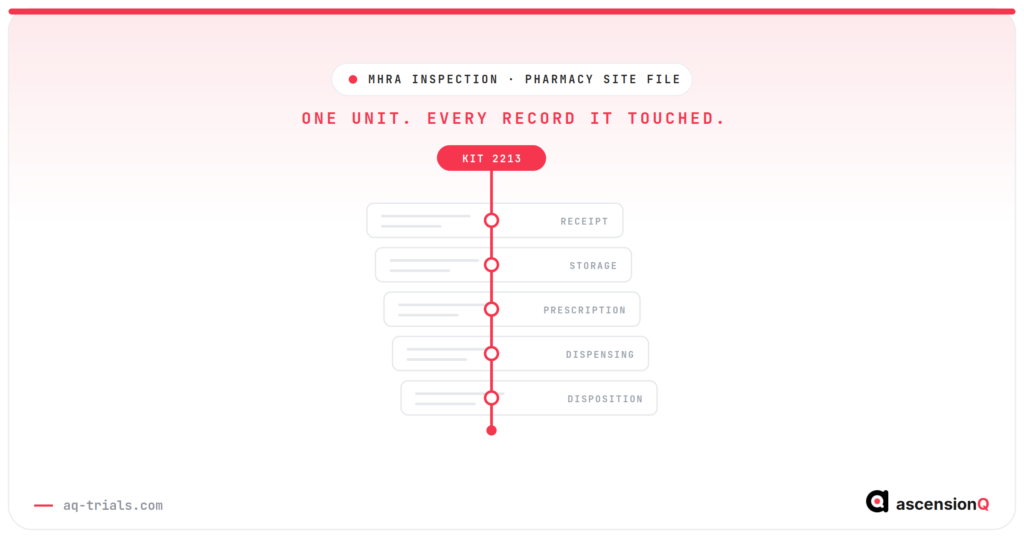
An MHRA inspector looks in a pharmacy site file for evidence that the site can rebuild the history of any unit of investigational medicinal product on demand. This guide covers the notification and dossier, what is requested and in what order, the walkthrough, the single unit trace and how findings are graded.
Who Releases IMP to a UK Site, and What Is QP Release?
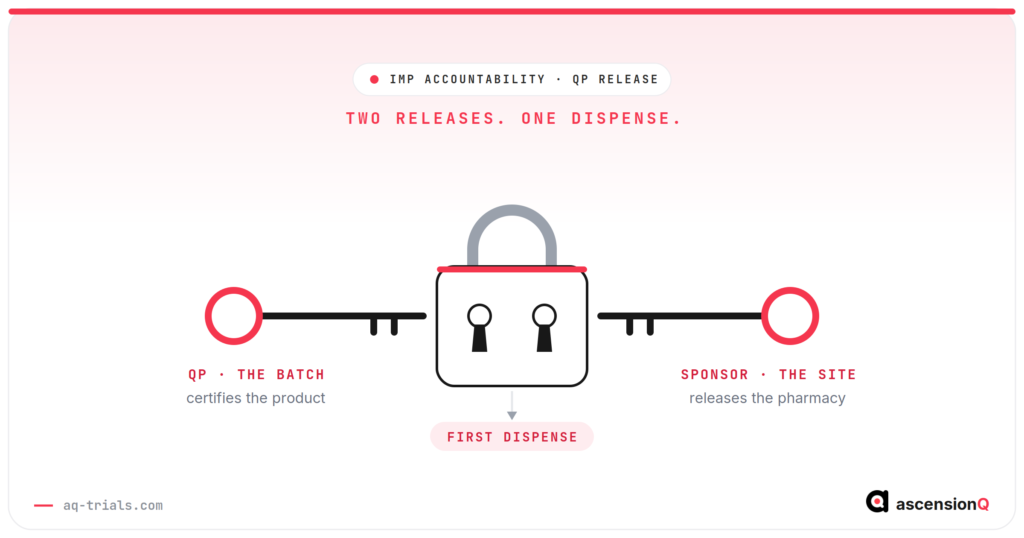
A Qualified Person releases an IMP batch by certifying it, and the sponsor releases that stock to a named site. This guide covers QP certification, the MIA(IMP) behind it, how an imported product reaches a UK site, the green light to dispense, and which release documents a pharmacy files.
IMP Labelling Requirements for UK Trials
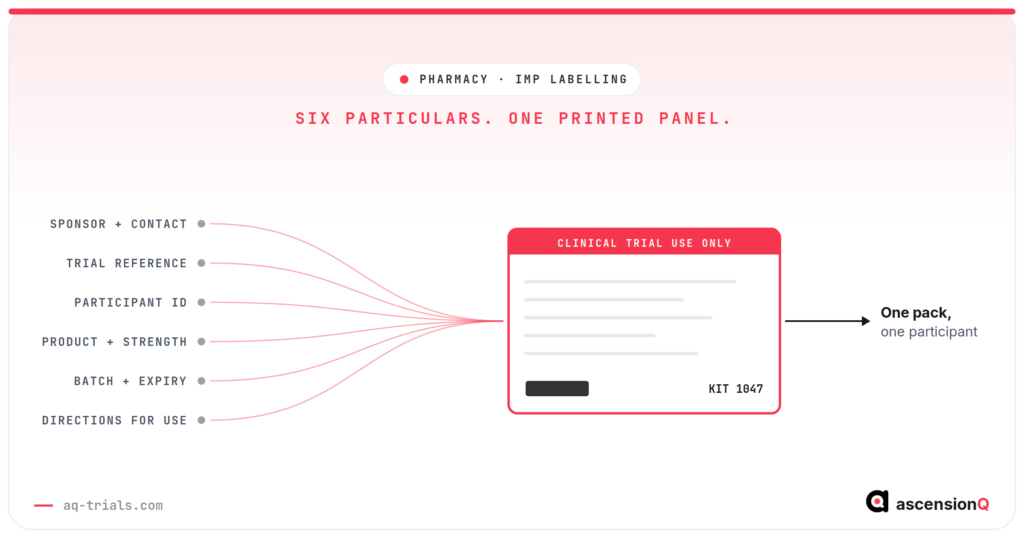
IMP labelling requirements for UK trials are set by regulation 46 of the Clinical Trials Regulations, as amended from 28 April 2026. This guide covers the particulars a full label must show, which labelling set applies to which product, who may apply or change a label, and expiry extension at site.
Blinding in the Pharmacy: Keeping the Secret and Breaking It in an Emergency
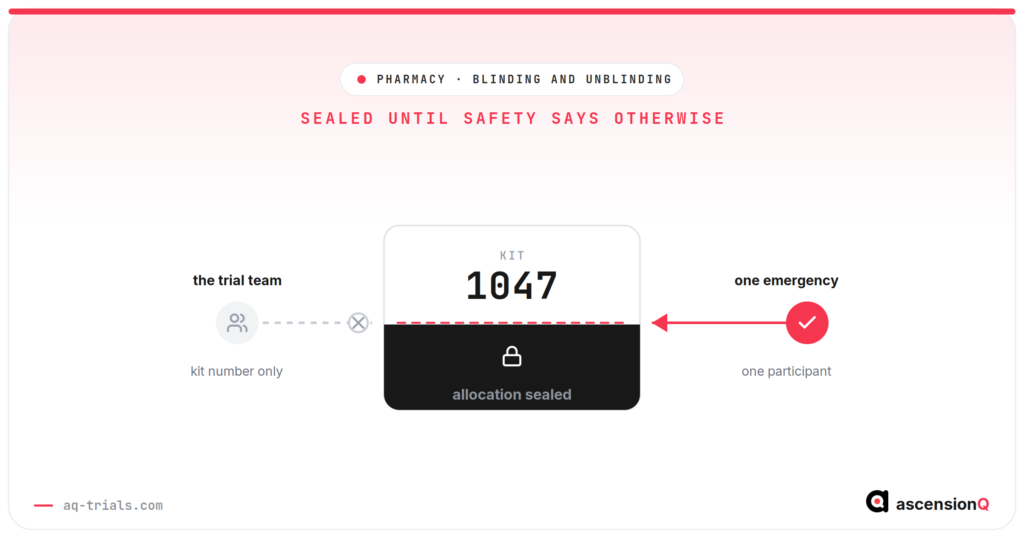
Blinding in the pharmacy means holding the treatment allocation out of reach of the trial team, and releasing it for one participant when a clinical emergency requires it. This guide covers who may know what is inside a kit, what ICH E6(R3) section 2.11 requires, how a code break runs, and what is recorded.