Who Employs the Research Nurse? The Contract Chain in an SMO Model

The site management organisation employs the research nurse. The principal investigator at the site delegates the trial duties that nurse performs. This guide covers the chain from sponsor to CRO to SMO to site, which UK model agreement names which party, and which instrument carries which obligation.
The Two SMO Operating Models: Own Sites and Placed Staff
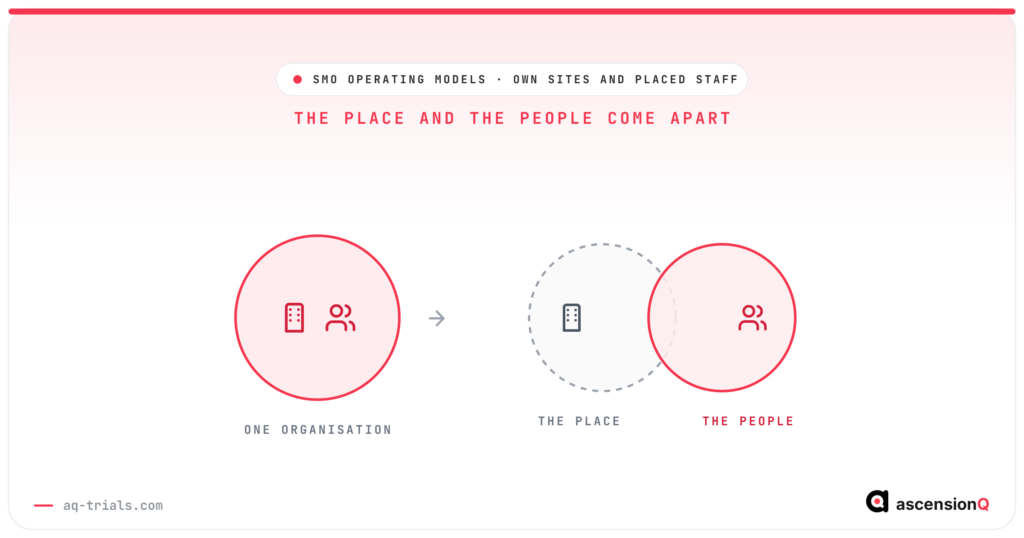
An SMO runs one of two operating models. It owns the research site, or it places its staff inside an institution somebody else runs. This guide covers the dividing line UK research policy draws, what changes on either side of it, and the hybrid arrangement most SMOs actually run.
Site Management Organisations: A Complete Guide to Running Research Across Multiple Sites
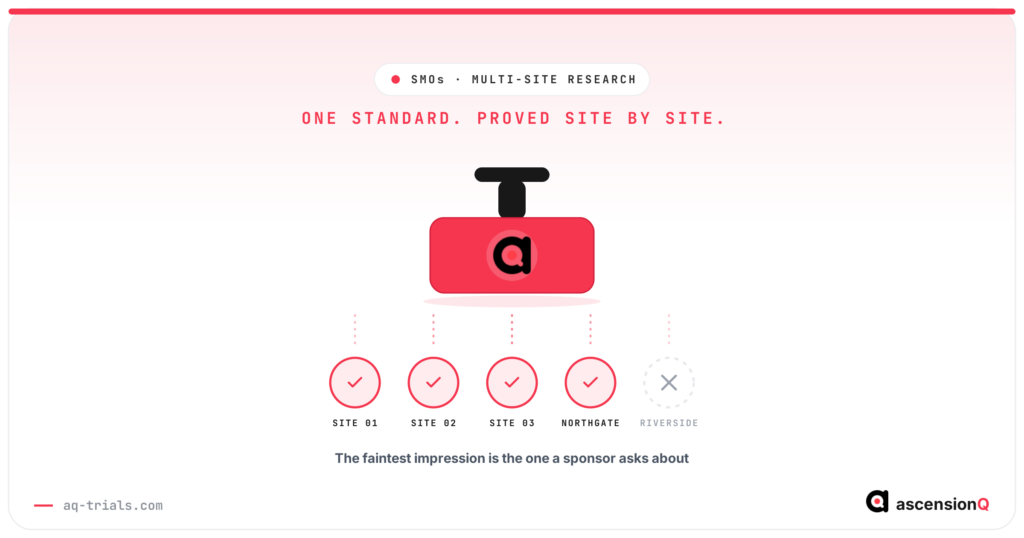
A site management organisation supplies the people, procedures and site capacity a sponsor’s study needs at the point of delivery, at sites it owns or through staff placed in host institutions. This guide covers the two operating models, who stays accountable, the network standard, recruitment, audit and metrics.
What Is a Clinical Trial Pharmacy and How Does It Differ from Routine Dispensing?
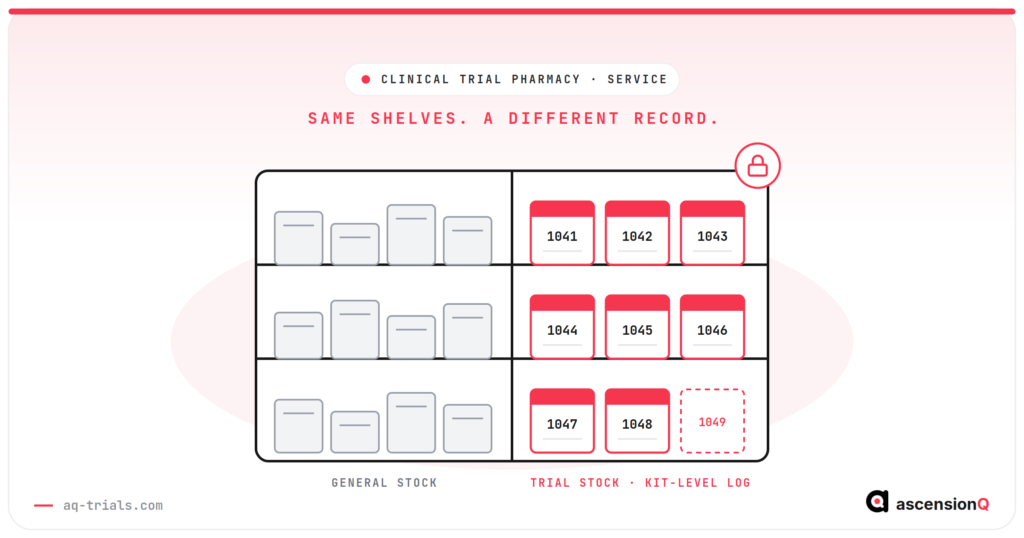
A clinical trial pharmacy receives, stores, dispenses and accounts for IMP on the investigator’s behalf, and traces every unit well past supply. This guide covers what the service does, how it differs from routine dispensing, and the in-house, outsourced and homecare models that run it.
Who Is Accountable for IMP at a Trial Site?
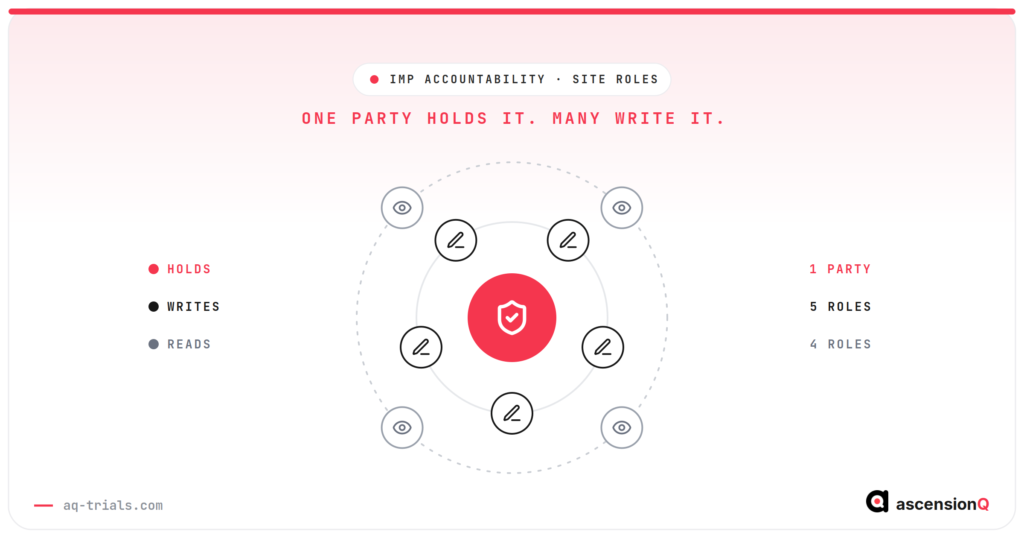
The investigator or institution is accountable for IMP at a trial site. This guide takes the roles one by one, from trials pharmacist, technician, ATO, prescriber and research nurse to monitor, QA, sponsor and inspector, and shows which hold accountability, which record and which only read.
From Depot to Patient: The Twelve Steps a Trial Medicine Takes
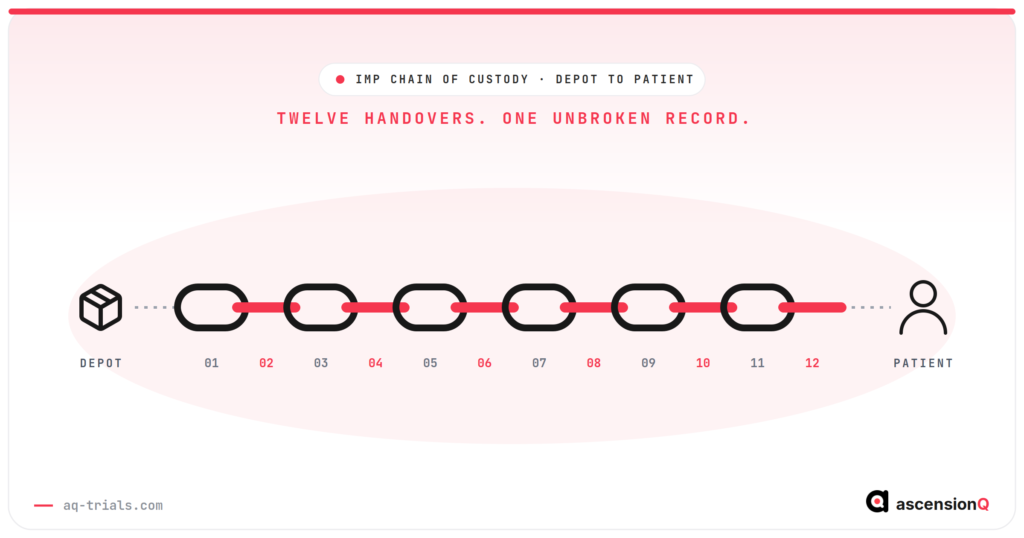
A trial medicine takes twelve steps from the sponsor’s depot to the patient and on to final disposition, and each step leaves its own record. This guide walks the IMP chain of custody step by step, names the record each handover leaves, and shows the four places those records end up.
What Is an Investigational Medicinal Product?
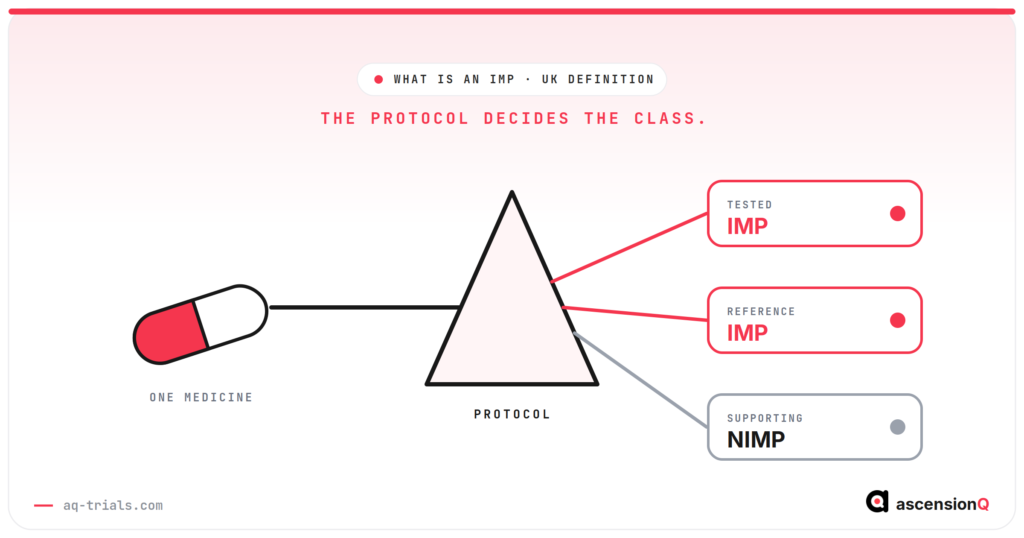
An investigational medicinal product is a medicine or placebo that a clinical trial tests or uses as a reference. This guide covers the UK definition in regulation 2, the difference between an IMP, a NIMP and an auxiliary medicinal product, when a licensed drug becomes an IMP, and what a kit is and who numbers it.
Who Uses eSource in a Clinical Trial? From Research Nurse to Sponsor
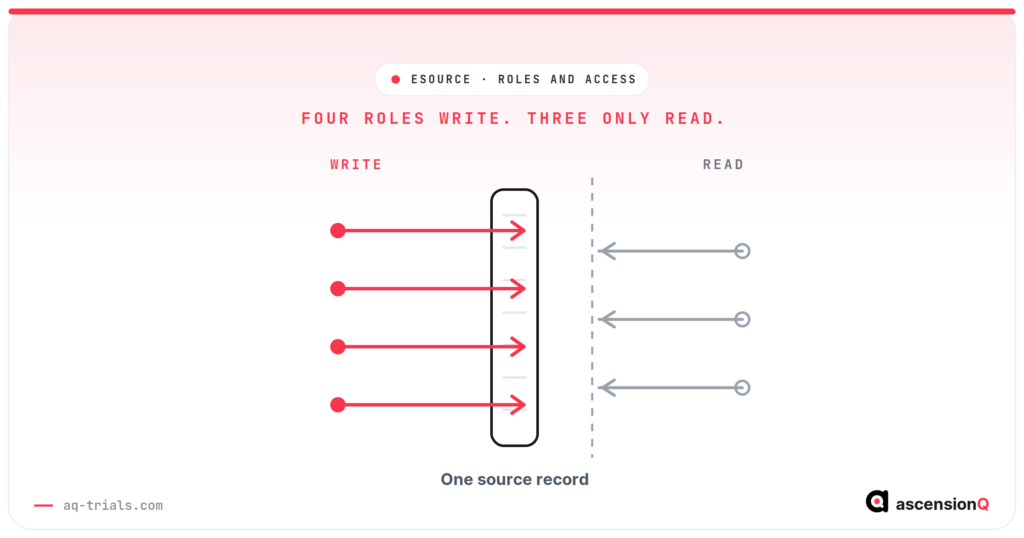
eSource in a clinical trial is used by seven roles, from the research nurse who records the observation to the sponsor who receives the reported data. This guide covers what each role does with the record, which four of them may change data, which three only read it, and the ICH E6(R3) clauses behind each duty.
eSource vs EDC: Where Source Data Ends and the CRF Begins
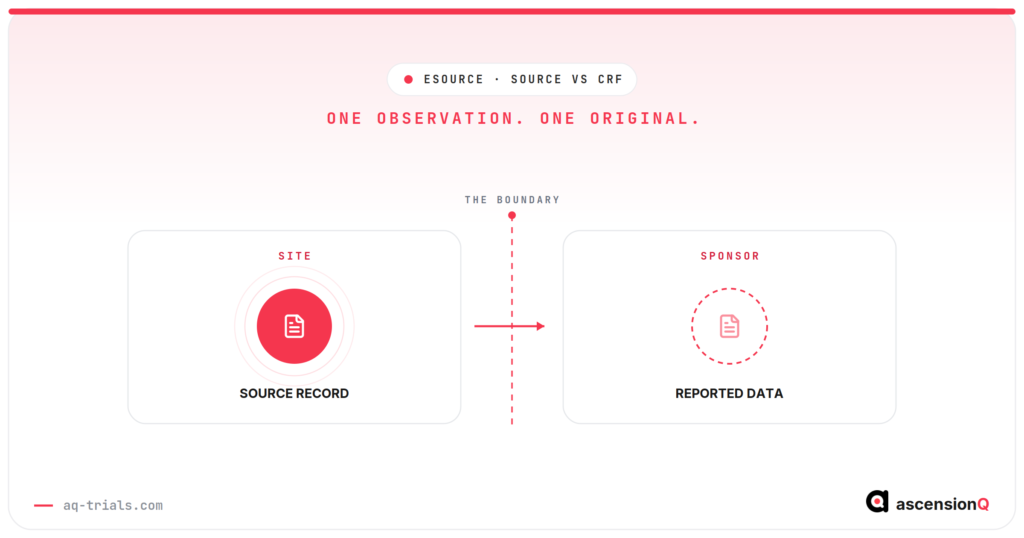
eSource and EDC differ by which record holds the original. eSource is the site’s first electronic capture of an observation, and EDC is the sponsor’s route for receiving reported data. This guide covers where source data ends and the CRF begins, when the CRF itself is the source, what a transcription step adds, and which party controls each record.
Types of eSource: Direct Data Capture, EHR, EHR-to-EDC and ePRO
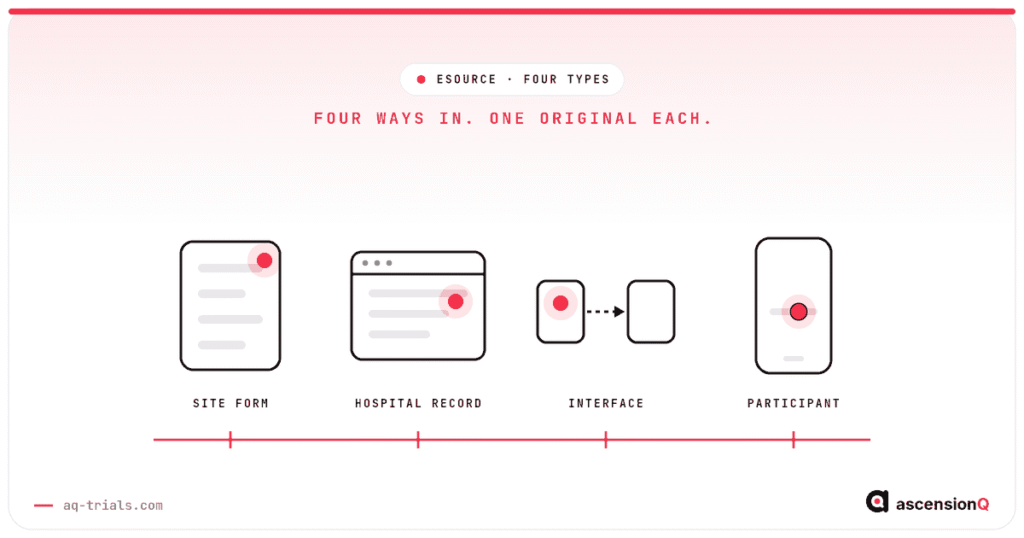
The four types of eSource in clinical trials are direct data capture, the EHR used as source, EHR-to-EDC transfer and ePRO. This guide covers what each type captures, who enters the data, how the value reaches the CRF, and what FDA, EMA and ICH E6(R3) guidance says about each one.