Which Record Is the Source When Data Sits in Both the EPR and the Trial System?
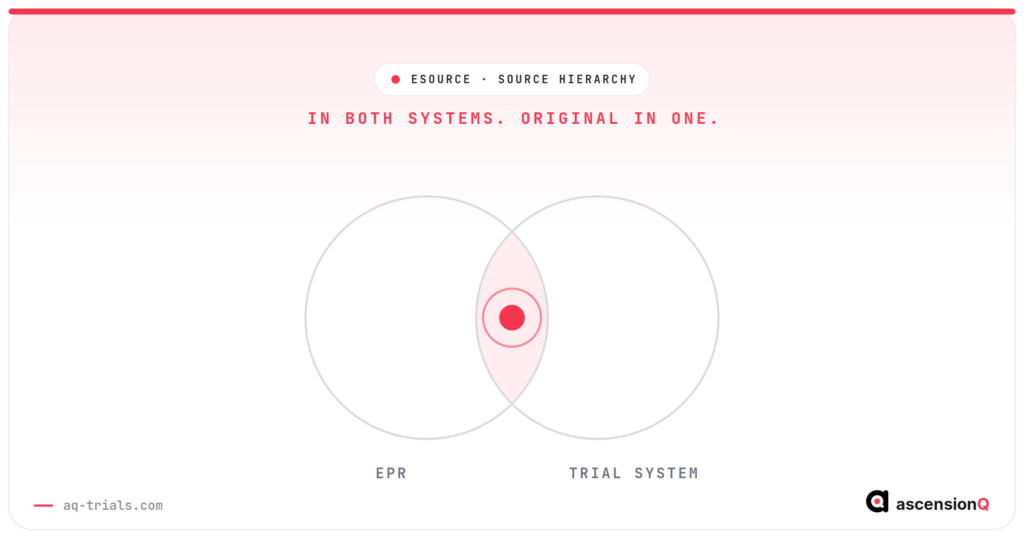
The source is the record that held the observation first, and the site declares that record per data point before the study opens. This guide covers the test that separates an original from a copy, the order that settles a duplicate, how the declaration works, and what an inspector asks.
eSource vs Paper Source Worksheets: What Changes at the Site
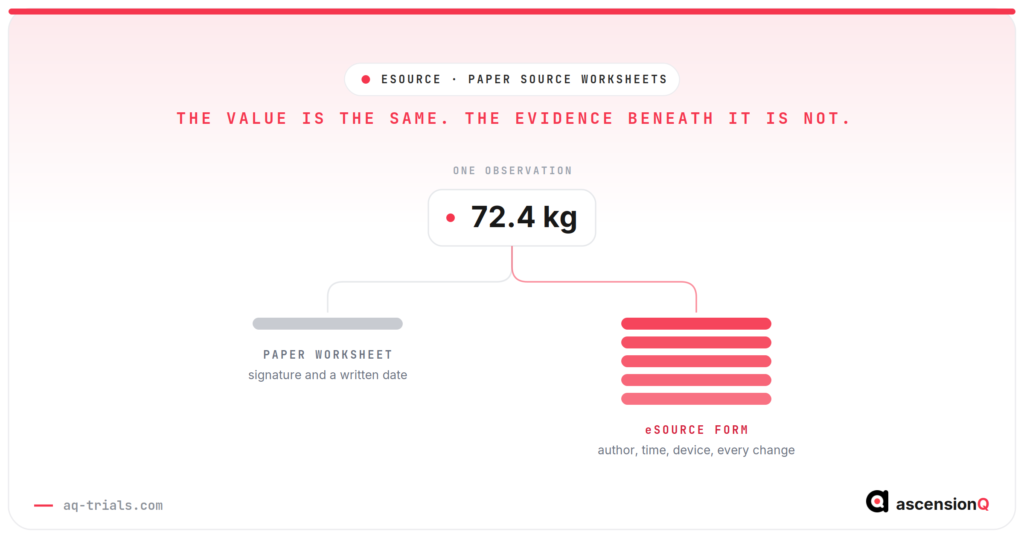
eSource and paper source worksheets differ at the site in four places: how errors arise, how a correction is recorded, where the record is stored, and how much work monitoring creates. This guide covers each one, and what stays the same whichever format a UK research site uses.
CTMS vs eTMF vs EDC vs eISF: Which System Do You Actually Need?
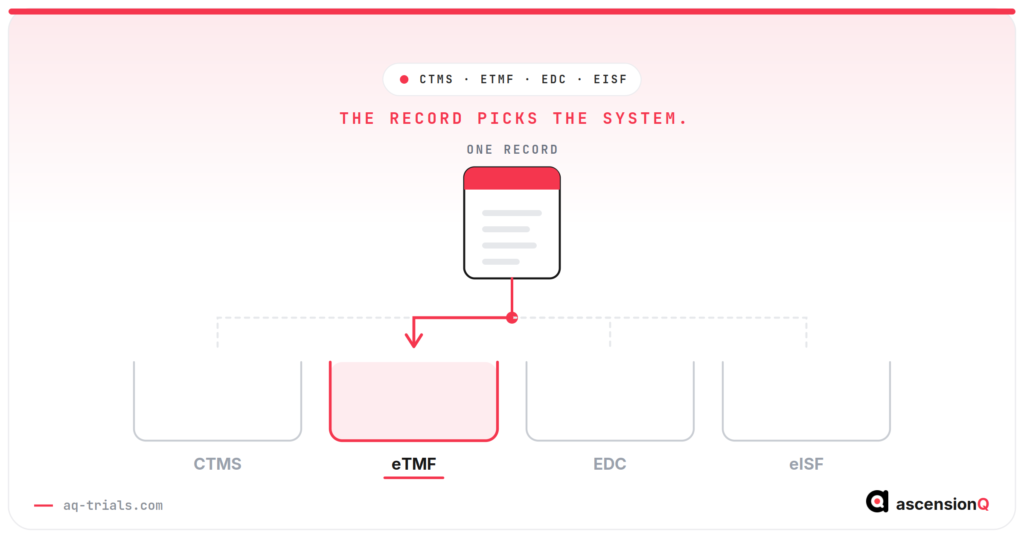
A CTMS, an eTMF, an EDC system and an eISF answer four different questions about the same trial. This guide sets out the record each one owns, which of them UK law and ICH-GCP E6(R3) actually name, the six records that end up with two owners, and the order in which to close the gaps.
eISF for NHS Trusts: Electronic Investigator Site File Requirements
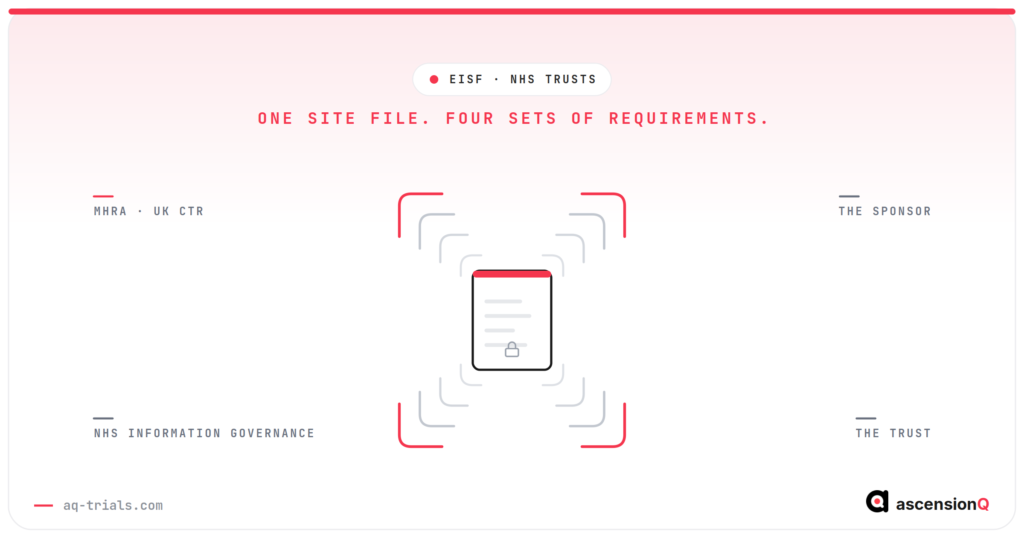
An electronic investigator site file in an NHS trust answers to four sets of requirements at once. This guide covers the 25-year retention duty under regulation 31A, what turns a scan into a certified copy, access that follows the delegation log, and the DSPT, Cyber Essentials and DTAC assurance a trust verifies before go-live.
Florence eISF Alternatives: Connecting the Site File to the Study Record
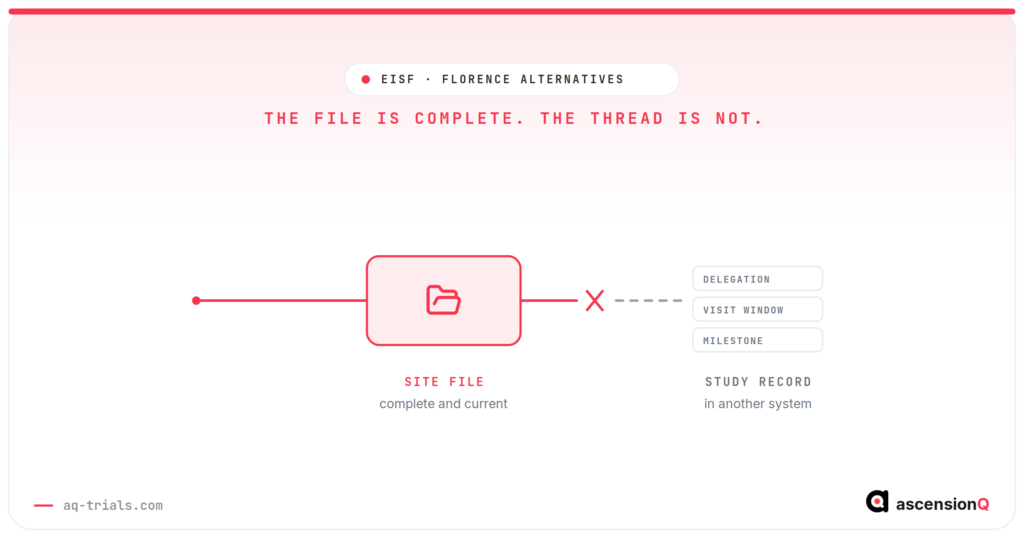
Florence alternatives compared and named: Veeva SiteVault, Complion from RealTime, Advarra eReg, TransPerfect Trial Interactive, SharePoint and AQ. Each is described in its vendor’s own published wording, with what a site file does not hold, what an inspection costs when one study sits in two systems, and how a move is planned.
ALCOA+ and the Trial Master File: Applying Data Integrity Principles
ALCOA+ applies to the whole Trial Master File, including the system that holds it. This guide maps each of the nine attributes to the TMF control that evidences it, shows where attributes are lost between the activity and the filing, and explains why four of the nine sit with the system rather than the page.
TMF Reference Model and the Investigator Site File: Where eISF Fits
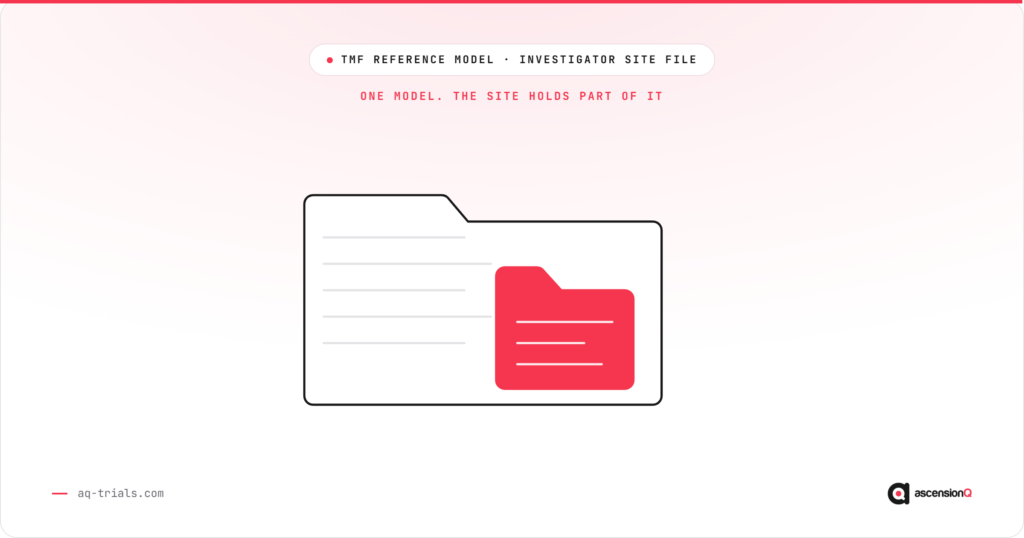
The investigator site file structure is the site-held part of the Trial Master File. This guide maps the ISF to the CDISC TMF Reference Model, shows which of the 11 zones live at the site, who holds each copy, and how a shared structure lets a monitor reconcile the two files zone by zone.
NHS R&D: Governing Site Files Across a Trust’s Studies
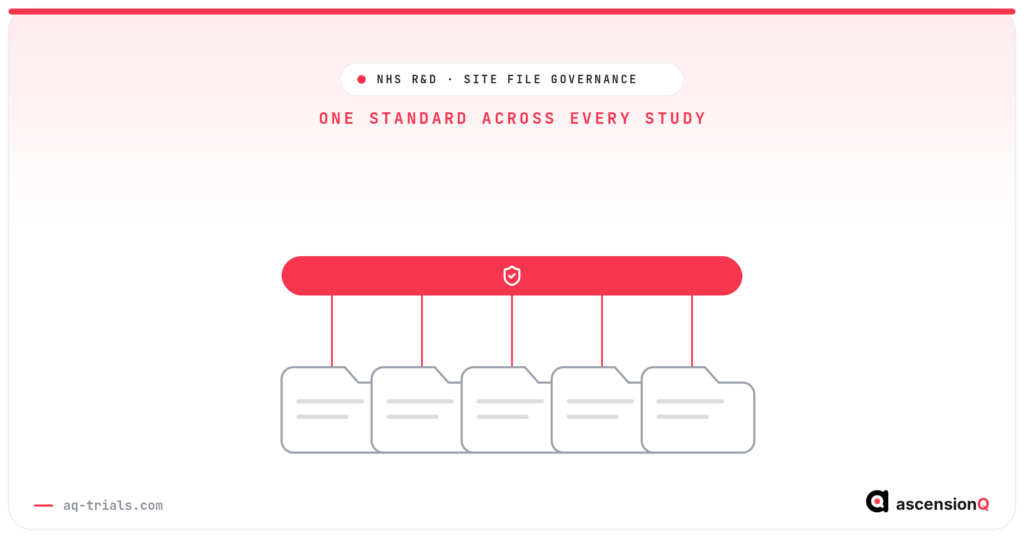
NHS R&D site file governance is the trust-level control that keeps every study’s site file complete, current, and consistent across the whole portfolio. This guide explains what an R&D office must govern, how consistency breaks when each study files on its own, and the controls that hold a trust-wide standard.
Placeholder Documents in a TMF: Why Gaps Need Owners, Not Just Flags
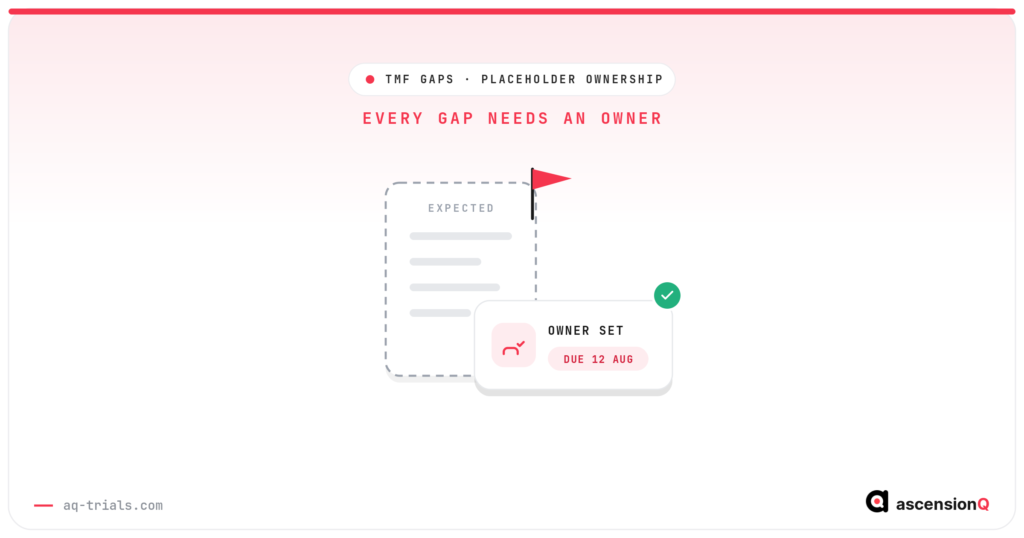
A placeholder document in a Trial Master File marks an expected record before the real one arrives. It makes an absence visible, but a flag alone does not close it. This guide explains what placeholder documents are, why every gap needs a named owner and a due date, and when a persistent gap should escalate to CAPA.
eISF vs Paper Site Files: Closing the Monitoring Visit Gap
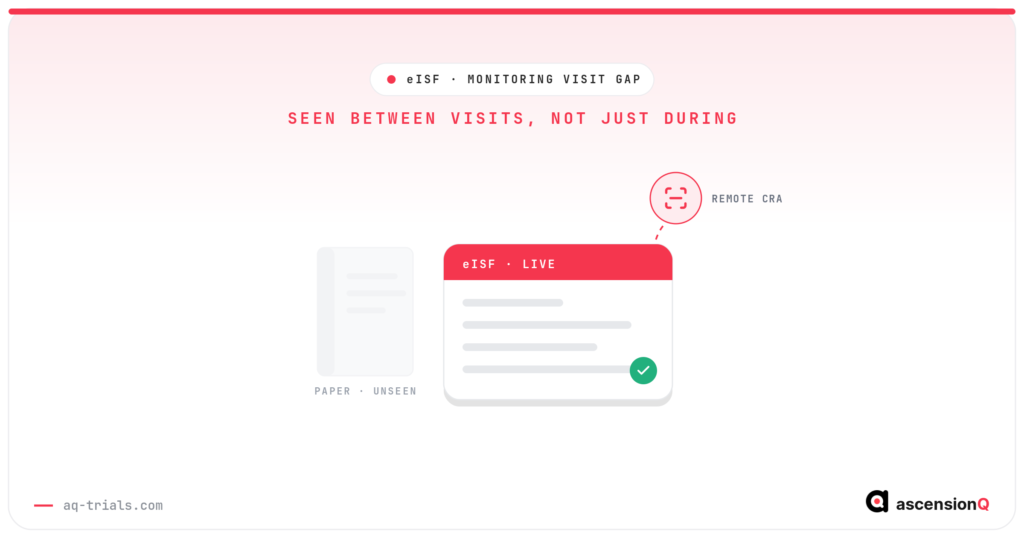
An electronic Investigator Site File and a paper site file hold the same essential documents, but only one can be reviewed between monitoring visits. This guide explains the monitoring visit gap, compares eISF and paper across the controls inspectors test, and shows what actually closes it.